
Buy beef chuck by the cut, not by the word "chuck." Choose chuck roast for pot roast, chuck eye steaks for grilling or pan-searing, and think of the chuck roll as the big piece we break down into those cuts.

Chuck comes from the shoulder, through the first five ribs, and tenderness changes a lot from one muscle to the next. Once you know which part a cut comes from, you know how to cook it. For food safety, the USDA recommends 145°F plus a 3 minute rest for whole beef steaks and roasts, and 160°F for ground beef.
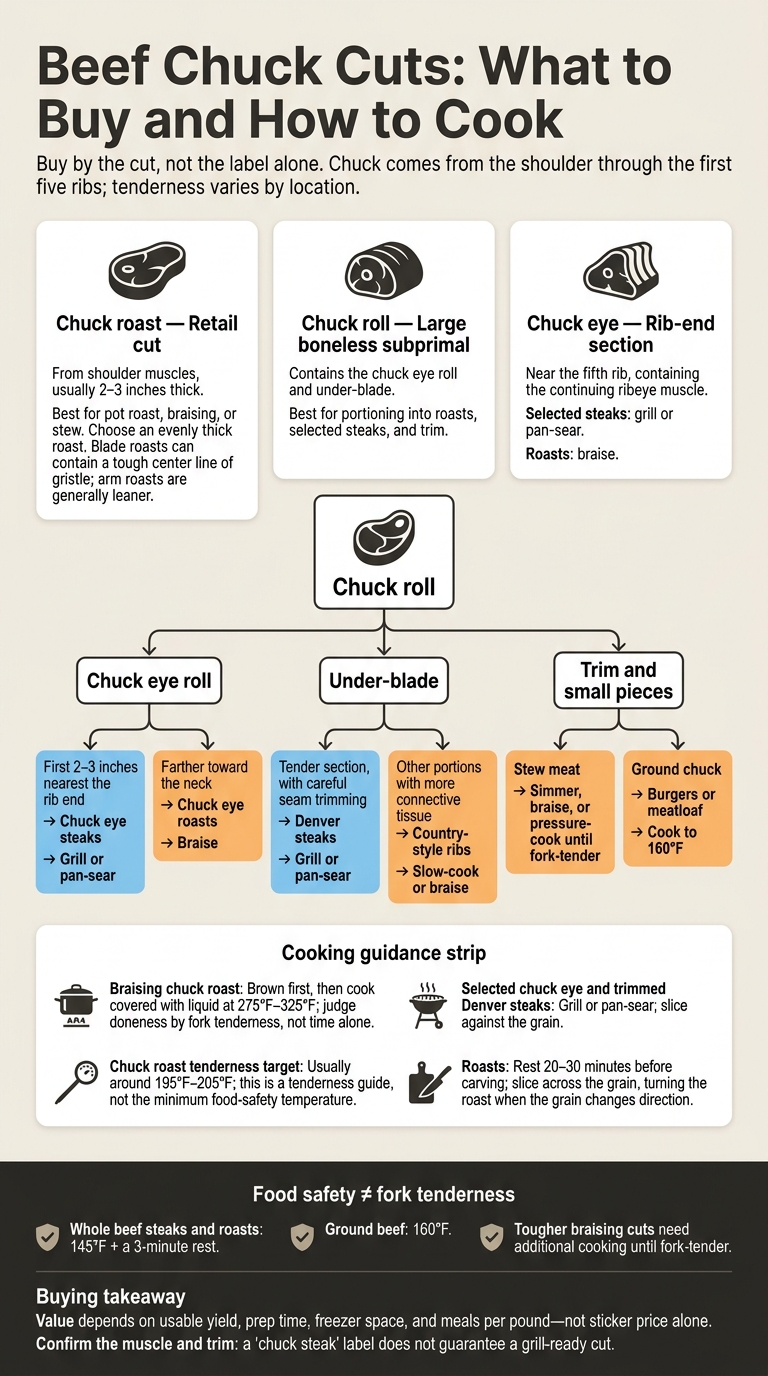
Beef Chuck Cuts: What to Buy and How to Cook
Chuck Roll Breakdown
Watch our butcher break down a chuck roll:
sbb-itb-5ae85c5
Chuck Roast vs Chuck Roll vs Chuck Eye
Chuck roast is a retail cut. Chuck roll is the larger boneless section it comes from. Chuck eye is the rib end of that section, right next to the ribeye.
| Cut | What It Is | Best Use |
|---|---|---|
| Chuck roast | A roast cut from the shoulder muscles | Pot roast, braising or stew |
| Chuck roll | A large boneless section at the heart of the chuck, made up of the chuck eye roll and the under blade | Cut into roasts, steaks, stew meat and ground beef |
| Chuck eye | The rib end of the chuck roll, near the fifth rib, where the ribeye muscle continues | Quick-cooked as steaks, or braised as a roast |
Choosing and Braising Chuck Roast
For braising, look for an evenly thick roast with fine marbling rather than thick seams of fat. Blade roasts can have a line of gristle through the center, while arm roasts are usually leaner.
Our chuck roast runs about 2.8 to 3 pounds and is cut from choice-grade beef aged at least 21 days, with no preservatives or additives. It is currently $19.99, on sale from $29.99. Chris on our team calls it a true pot roast and his favorite roast.
Prices are subject to change without notice.

Pat the roast dry, brown it, then cook it covered with liquid at 275°F to 325°F. The connective tissue breaks down into gelatin as the roast climbs toward 190°F to 205°F, so judge doneness by fork tenderness, not time.
Breaking Down a Chuck Roll
The chuck roll has the most options. Our butchers separate the chuck eye roll from the under blade along the natural seams, then split the steak-ready rib end from the tougher braising pieces.

| Part of the Chuck Roll | What It Becomes | How to Cook It |
|---|---|---|
| First 2 to 3 inches of the eye roll, nearest the rib | Chuck eye steaks | Grill or pan-sear |
| Eye roll farther toward the neck | Chuck eye roasts | Braise |
| Tender section of the under blade | Denver steaks, with careful trimming | Grill or pan-sear |
| Under blade pieces with more connective tissue | Country-style ribs | Slow-cook or braise |
| Trim and small pieces | Stew meat or ground chuck | Stew, burgers or meatloaf |
What Is Chuck Eye?
Chuck eye is the most steak-like part of the chuck. Because it sits right next to the ribeye, steaks from the rib end can be cooked hot and fast like a ribeye. For a closer look, see chuck eye vs ribeye.
Our chuck eye steaks come four to a package at 6 to 8 ounces each, currently $19.99, on sale from $24.99.

Buying Beef Chuck Cuts
Why Chuck Offers Good Value
Chuck gives you rich, beefy flavor at a lower price than loin and rib cuts. Judge value by meals, not sticker price. A pot roast feeds the family once, then the leftovers and the cooking liquid turn into gravy, sandwiches or another dinner.
For burgers and meatloaf, ground chuck is a great pick. It is typically around 80% lean, so it stays juicy.
Buying Individual Cuts or Buying in Bulk
Buy individual cuts when you want meat that is ready to cook. Buy a quarter, half or whole beef when you want to stock your freezer for months.
- Individual cuts: Order online for pickup at our Cleveland store, or for $5.00 delivery on orders of $150 or more in select Oklahoma cities
- Custom processing: If you are having your own beef processed, our beef cutting order form lets you keep chuck and arm roasts in 2 to 3, 3 to 4 or 5 to 6 pound sizes, or grind them for more burger
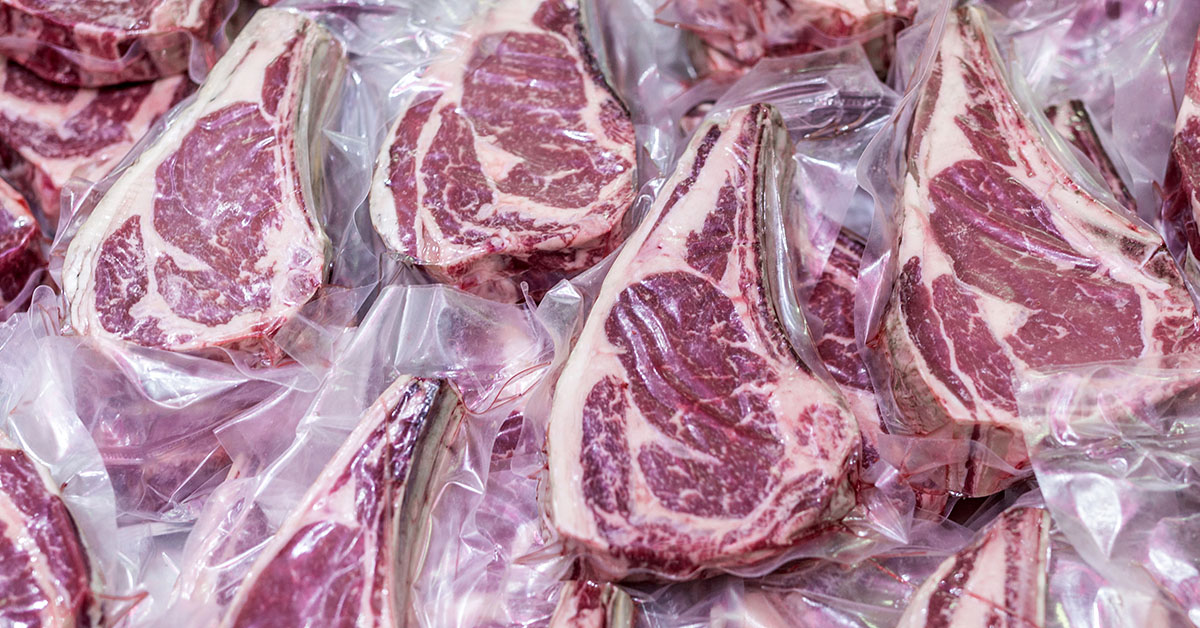
Our meat is vacuum sealed and frozen. At home, use the oldest packages first and thaw in the refrigerator.
Cooking Methods for Each Chuck Cut
Match the cooking method to the cut, and check food safety and tenderness separately.
| Cut | Cooking Method | How to Check Doneness |
|---|---|---|
| Chuck roast | Braise, slow-cook, pressure-cook, or smoke at 225°F to 250°F | Fork tender, usually around 195°F to 205°F |
| Chuck eye steak | Grill or pan-sear over high heat | At least 145°F, then rest 3 minutes |
| Denver steak | Grill or pan-sear | At least 145°F, then rest 3 minutes |
| Under blade roast | Braise | Fork tender |
| Stew meat | Simmer, braise or pressure-cook | A piece should break apart easily with a fork |
| Ground chuck | Grill, pan-fry or bake as meatloaf | 160°F on a thermometer |

For slow-cooked cuts, sear first for flavor, then cook gently. Rest roasts 20 to 30 minutes before carving, and slice across the grain. For more on braising, slow cooking and marinades, see making the most of tough cuts.
Key Takeaways
- Buy chuck by the cut: chuck roast for braising and chuck eye steaks for grilling or searing
- Braise the tougher shoulder cuts low and slow, and cook steaks from the rib end hot and fast
- Judge value by how many meals a cut gives you, not just price per pound
FAQs
Why is my chuck roast still tough?
It almost always needs more time. Chuck roast needs low, moist heat for several hours to break down its connective tissue. If yours is tough, add a little liquid, put it back on low heat, and keep cooking until it shreds easily, usually around 200°F to 205°F.
Can I substitute chuck roast for chuck eye?
For pot roast, yes. A standard chuck roast braises beautifully. For grilling, no. A chuck eye steak comes from the rib end next to the ribeye, which is what makes it tender enough to cook hot and fast. A regular chuck roast needs slow, moist heat.
How do I figure cost per serving for chuck?
Divide the price by the number of servings you expect to get. A 3 pound chuck roast, for example, usually feeds a family for at least one dinner plus leftovers. Boneless cuts give you more usable meat per pound than bone-in cuts.