
We know meat prices can stretch your grocery budget, especially with rising food costs. But here’s the good news: there are smart ways to save without sacrificing quality or variety. From buying in bulk to choosing less expensive cuts, these strategies can help you feed your family well while keeping costs in check.
For example, did you know purchasing a quarter of beef can provide around 142 pounds of meat at a lower per-pound cost than weekly shopping? Or that tracking sales can slash prices by up to 50%? These are just a few of the insights we’ll share to help you make the most of your meat budget.

Let’s dive into six actionable tips you can start using today.
1. Shop Sales and Clearance Sections
Affordability
We recommend starting in the meat department to scout for manager’s specials and clearance items before moving on to the rest of your grocery list.
"If meat goes on sale significantly cheaper than it normally sells for, it’d be smart to stock up."
- Janet Keeler, Contributing Editor at The Penny Hoarder
Grabbing meat during sales can lead to savings of up to 50% or more compared to regular prices. To spot a great deal, use a price book – whether it’s a notebook or a phone app – to track average costs per pound. For example, watch for ground beef to drop 30% to 40% below its usual price or for steaks and roasts to hit 40% to 50% off. Once you find a bargain, double-check the meat’s freshness and quality before buying.

Quality of Meat
Even clearance meat can meet high standards if it looks fresh and has a manager’s special sticker. These items are safe to cook right away or freeze for later use.
Storage and Longevity
After buying sale meat, portion it immediately. Wrap each piece in foil and store it in heavy-duty freezer bags to prevent freezer burn. Don’t forget to label each package with details like the cut type, weight, and date frozen.
"You might think you’ll remember later, but you won’t if you have several unmarked foil and bagged packages in your freezer."
- Janet Keeler
Keep your freezer set at 0°F to maintain the quality of the meat. Ground meats stay fresh for 3 to 4 months, while steaks and roasts can last up to 12 months when stored correctly. Proper storage not only ensures the meat stays fresh but also makes meal planning easier.
Practicality for Meal Preparation
Flexibility is key when planning meals around sale items.
"This technique will require you to be flexible in your meal planning. You wanted bone-in pork chops but boneless are on sale? Get out your phone and look for a recipe."
- Janet Keeler
sbb-itb-5ae85c5
2. Buy Value Cuts Like Roasts and Tougher Meats
Affordability
Choosing value cuts is a smart way to save money without giving up on nutrition. Cuts like pork shoulder and beef brisket are much cheaper per pound compared to premium options. Buying roasts in bulk can slash costs by 40% to 50% when compared to standard grocery store prices. These cuts are often overlooked, which helps keep their prices lower, even when other meats get more expensive.

Quality of Meat
Value cuts don’t just help your wallet – they’re packed with nutrients. They provide high-quality protein, along with essential B vitamins and minerals like zinc, phosphorus, iron, and selenium. Plus, the connective tissue and marbling in these cuts bring a richer, deeper flavor when cooked properly. Slow-cooking methods like braising or smoking break down the tougher fibers, turning these budget-friendly options into tender, flavorful dishes.
Once you’ve picked out these nutrient-rich cuts, proper storage ensures they stay fresh for longer.
Storage and Longevity
Roasts and larger beef cuts can maintain their quality for up to 12 months when stored correctly. For best results, divide large roasts into smaller, meal-sized portions and vacuum-seal them to avoid freezer burn.
Practicality for Meal Preparation
These cuts are incredibly versatile and work well with slow cookers, Instant Pots, or smokers, making them perfect for busy schedules. A single pork shoulder can stretch across multiple meals, providing pulled pork for sandwiches, tacos, or rice bowls throughout the week. Leftover shredded brisket is just as flexible, easily topping pasta or filling wraps. We love how these cuts simplify meal prep while adding variety to your menu.
3. Purchase in Bulk or Bundles
Affordability
Buying meat in bulk can be a smart way to stretch your dollar. For instance, purchasing a quarter of beef from a 1,300-pound cow yields about 142 pounds of meat. This includes everything from ribeye steaks to ground beef, all at a much lower price per pound compared to weekly cuts. While the upfront cost may seem steep, the savings over time can add up to hundreds of dollars each year by avoiding weekly grocery store markups.

Warehouse stores like Costco or Sam’s Club also offer meat bundles and packs at competitive prices. However, you may need to portion these yourself once you get home. Another great option is to buy directly from local farms or wholesale suppliers, many of which typically cater to restaurants. If the initial cost feels overwhelming, consider splitting the purchase with family or friends to make it more manageable.
Once purchased, proper storage is key to preserving your investment.
Storage and Longevity
When stored correctly, bulk meat can last up to a year in the freezer, making it a reliable way to shield against price hikes caused by inflation or supply chain issues. If you’re buying a whole animal or a large quantity, ensure you have enough freezer space to accommodate it. It’s also a good idea to portion and label the meat right away to maintain its quality and make it easier to use later.
Practicality for Meal Preparation
One of the biggest perks of buying in bulk is the variety it offers. You’ll receive a mix of cuts that make meal planning easier and more flexible. Plus, you can often work with your butcher to customize the ratio of ground meat, steaks, and ribs to suit your family’s preferences. For example, a quarter of beef provides a mix of premium cuts and a significant amount of ground beef. Similarly, buying half a hog can yield bacon, ham, sausage, chops, and roasts. This range ensures you’re ready for anything, whether it’s a weekend barbecue or a quick weeknight dinner like tacos.
4. Track Prices with a Price Book
Affordability
Keeping a price book is a simple but effective way to monitor meat prices. By recording the price per pound of your favorite cuts at various local stores, you can establish a clear baseline. This helps you recognize when meat is genuinely cheaper, rather than being misled by a flashy "sale" sticker.

Start by visiting nearby grocery stores, international markets, and wholesalers to jot down current prices for specific cuts. Take note of sale patterns and the typical discounts offered on key items. This information allows you to anticipate deals and plan your shopping trips accordingly. However, always consider travel costs: a sale at a store 20 miles away might not save you money once you factor in gas expenses.
Practicality for Meal Preparation
A price book also helps you compare bulk purchases with standard sale prices to ensure you’re getting the best value. For instance, if you’re thinking about buying a quarter of beef (which typically yields around 142 pounds of meat), you can calculate the cost per pound and compare it to your tracked retail prices to see if it’s truly a better deal. Similarly, tracking your usual costs can help you decide if a meat bundles from a local supplier is worth the upfront expense.
To stay organized, we suggest using a dedicated notebook or a grocery cost comparison worksheet. Arrange your data by store and meat type for quick reference. Over time, this method makes it easier to spot the best deals and can even inspire you to explore other ways to save.
5. Compare Pre-Packaged vs. Butcher-Cut Meats
Affordability
When we compare pre-packaged meats to butcher-cut options, the savings can vary depending on how you shop. While supermarket meats are often seen as budget-friendly, butcher shops can compete on price, especially when you consider quality and yield. Buying whole, half, or even quarter animals directly from a butcher or farm often lowers the overall cost per pound compared to individual pre-packaged cuts. Plus, asking your butcher for alternative cuts with similar flavor profiles can stretch your dollar even further.

Quality of Meat
Freshness plays a big role in flavor and texture, and butcher-cut meat often has the edge here. Since it’s prepared on-demand, it’s typically fresher than pre-packaged meat, which might sit in plastic for several days. Butchers also tend to offer a wider variety of cuts, including specialty items like beef tongue, shanks, or bone marrow, which are rarely available in supermarket cases.
Storage and Longevity
Butcher-cut meats are excellent for long-term freezer storage, making them perfect for those who plan meals ahead. For example, storing 142 pounds of beef might require about 4.5 to 5.5 cubic feet of freezer space, while 60 to 70 pounds of pork would need around 2.25 cubic feet. This makes bulk purchases more practical for families or anyone with adequate freezer space.
Practicality for Meal Preparation
Pre-packaged meats are convenient, offering ready-to-cook portions that work well for smaller kitchens or quick meals. In contrast, butcher-cut meats, especially when bought in bulk, often require more preparation. Cuts like brisket or shoulder roasts are ideal for slow cooking, which can turn tougher cuts into tender, flavorful meals. Many butchers also provide custom cutting services, allowing you to choose portion sizes and thickness. This not only reduces waste but also ensures you’re getting exactly what you need for your cooking style. Tailored cutting can make a big difference in both cost savings and meal preparation.
6. Choose Whole Animals or Bone-In Options
Affordability
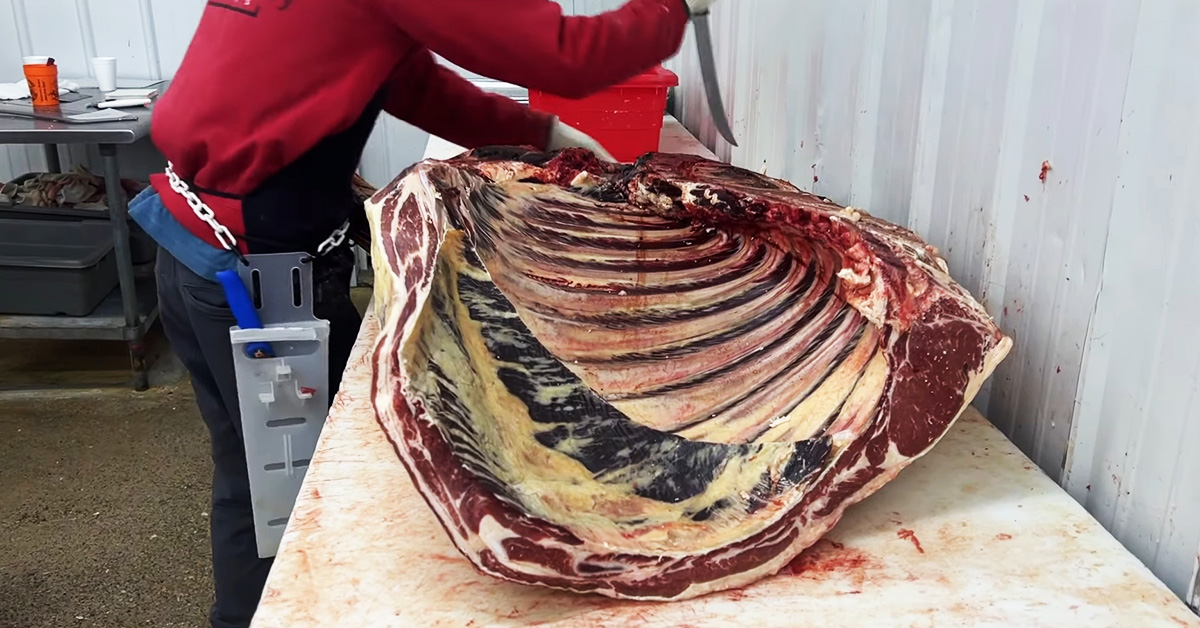
When it comes to saving money on meat, opting for whole animals or bone-in options can make a big difference. Buying an entire or partial animal spreads the cost across a variety of cuts, including premium ones like steaks and roasts that would otherwise cost a fortune if purchased individually. Typically, the total price includes both the animal (or your share of it) and processing fees, which significantly reduces the per-pound cost. If the upfront expense seems daunting, splitting the cost with others can make it more manageable. Beyond saving money, this approach also ensures access to higher-quality products.
Quality of Meat
Purchasing whole animals opens the door to cuts you rarely find at the grocery store. For example, a quarter of beef from a 1,300-pound cow provides about 142 pounds of meat. It also includes less common options like heart, liver, and bones for stock, which are often unavailable in retail settings. Bone-in cuts are especially prized for their rich flavor and moisture. As food journalist Sue Quinn points out:
"Thighs are generally less expensive than breasts, they’re widely available boneless, and chefs prize them for their superior flavour and juiciness".
This principle holds true for all bone-in options, whether it’s chicken, lamb shanks, or other meats.
Storage and Longevity
Before diving into whole-animal purchases, it’s essential to assess your freezer space. A quarter of beef requires about 4.5 cubic feet in a chest freezer or 5.5 cubic feet in an upright freezer. For reference, half a hog (60 to 70 pounds of pork) fits into 2.25 cubic feet, while a whole lamb (47 pounds) takes up the same amount of space. Bone-in cuts need more room: 33 to 38 pounds of bone-in goat meat requires 2 cubic feet, compared to just 20 to 22 pounds of boneless meat. Chest freezers are particularly efficient for bulk storage, and having a wide variety of cuts on hand makes the investment in freezer space worthwhile.
Practicality for Meal Preparation
Having a variety of cuts available makes meal planning much easier and more versatile. Bones can be used to create flavorful stocks, while the range of cuts can inspire diverse meals, from tacos to hearty stews. As Sue Quinn highlights:
"The most cost-effective way to enjoy chicken is to buy one whole and use it for several meals".

Working with a local processor also allows you to customize portion sizes and thickness, ensuring each cut fits your cooking preferences and minimizes waste. This flexibility not only saves money but also enhances the overall cooking experience.
How I Save Hundreds on Meat (Even with Rising Prices!)
Wild Country Meats: A Local Resource for Meat Lovers
For those in Oklahoma and nearby areas, Wild Country Meats is a standout option for anyone looking to combine quality and affordability. Located in Osage County, this locally owned business has been serving the community since 1998 as both a custom meat processor and retail market. Their services align perfectly with the bulk-buying strategies we’ve discussed.

Wild Country Meats offers bulk packages like quarter, half, and whole beef, as well as half hogs. These meats are aged for at least 21 days to ensure tenderness and processed with USDA-certified full traceability. Beyond beef and pork, they also process buffalo, lamb, goat, and even wild game at their Cleveland location. Each animal is tagged, photographed, and inventoried, with an itemized report provided at pickup to ensure complete transparency.
For budget-savvy shoppers, their $5.00 flat-fee delivery service within a 50-mile radius is a game-changer. This service covers major hubs such as Tulsa, Oklahoma City, Bartlesville, and Stillwater, regardless of the order size. Alternatively, customers can use the convenient drive-thru at their Cleveland location, which opens at 8:00 AM.
The Cleveland store also caters to those who aren’t ready to purchase in bulk. They offer fresh meats, deli items, and custom meat bundles. Orders can even be placed online for added convenience. With a 4.6/5 customer rating, shoppers often highlight the "great prices" and "exceptional" quality of their products. As owner Chris Gabriel puts it:
"We don’t seek to satisfy our customers. We seek to amaze them."
Conclusion
Saving money on meat while still enjoying flavorful, nutritious meals is entirely possible with a thoughtful approach. By shopping sales, selecting value cuts, buying in bulk, monitoring prices, comparing packaging, and choosing whole or bone-in options, we can cut costs without giving up quality. As Denise Spencer-Walker, Food Communications Manager at AHDB, explains:
"The price of meat is rising but there are things you can do to keep costs down. It goes back to knowing which cuts to buy and how to cook them".
These tips not only simplify the shopping process but also help us create smarter meal plans. For those in Oklahoma, local options like Wild Country Meats provide affordable and reliable choices. With the right strategies and a little planning, saving money on meat while maintaining great taste and nutrition is well within reach.
FAQs
How can I tell if a meat “sale” is a good deal?
To find a great meat sale, it’s helpful to compare the sale price to the regular price. Discounts reaching up to 50%, particularly on bulk purchases, often indicate a worthwhile deal. Just make sure the quality aligns with your expectations and that the cut suits your needs. Purchasing in bulk and storing the meat correctly can help stretch your savings even further. Trusted suppliers like Wild Country Meats are a reliable option for consistent quality and fair pricing.
How much freezer space do I need for bulk meat purchases?
To store half a cow, you’ll need 8 to 10 cubic feet of freezer space, as it typically provides about 200 pounds of meat. A useful guideline is that 1 cubic foot can hold 35–40 pounds of packaged meat. If you’re using an upright freezer, you might need a bit more room – around 13 to 14 cubic feet – because of the shelving. Be sure to pick a freezer size that matches your storage needs and how you prefer to organize your meat.
What’s the safest way to freeze and thaw meat to avoid waste?
To keep meat safe while freezing, it’s important to wrap it securely in freezer-safe bags or containers, removing as much air as possible to prevent freezer burn. Make sure your freezer is set to 0°F (-18°C) or colder. When it’s time to thaw, use the refrigerator to keep the meat at a safe temperature. Avoid thawing it on the counter at room temperature. If you opt for cold water or a microwave to thaw, be sure to cook the meat right away.