
A beef shoulder clod is a large, boneless section of the chuck that often weighs 13 to 21 pounds. It is not one roast. Our butchers break it down into flat iron steaks, ranch steaks, clod roasts, shoulder tender and stew meat.

Each of those cuts cooks differently: hot and fast for the tender steaks, low and slow for the tougher roasts. Here is what comes from the clod, how to cook each cut, and how to get them from us.
Beef Shoulder Clod Breakdown
Watch our butcher break down a shoulder clod into roasts, stew meat and steaks:
sbb-itb-5ae85c5
Cuts That Come From the Shoulder Clod
Butchers separate the clod along its natural muscle seams instead of cutting it into equal pieces, then trim off excess fat and silver skin, the tough membrane that makes beef chewy. See how butchers customize meat cuts for more.

Flat iron steaks come from the top blade. We separate that muscle, remove the heavy strip of gristle through its center, and cut the two flat, tender pieces into steaks. Ranch steaks are cut across the grain from the center of the shoulder to shorten the fibers.
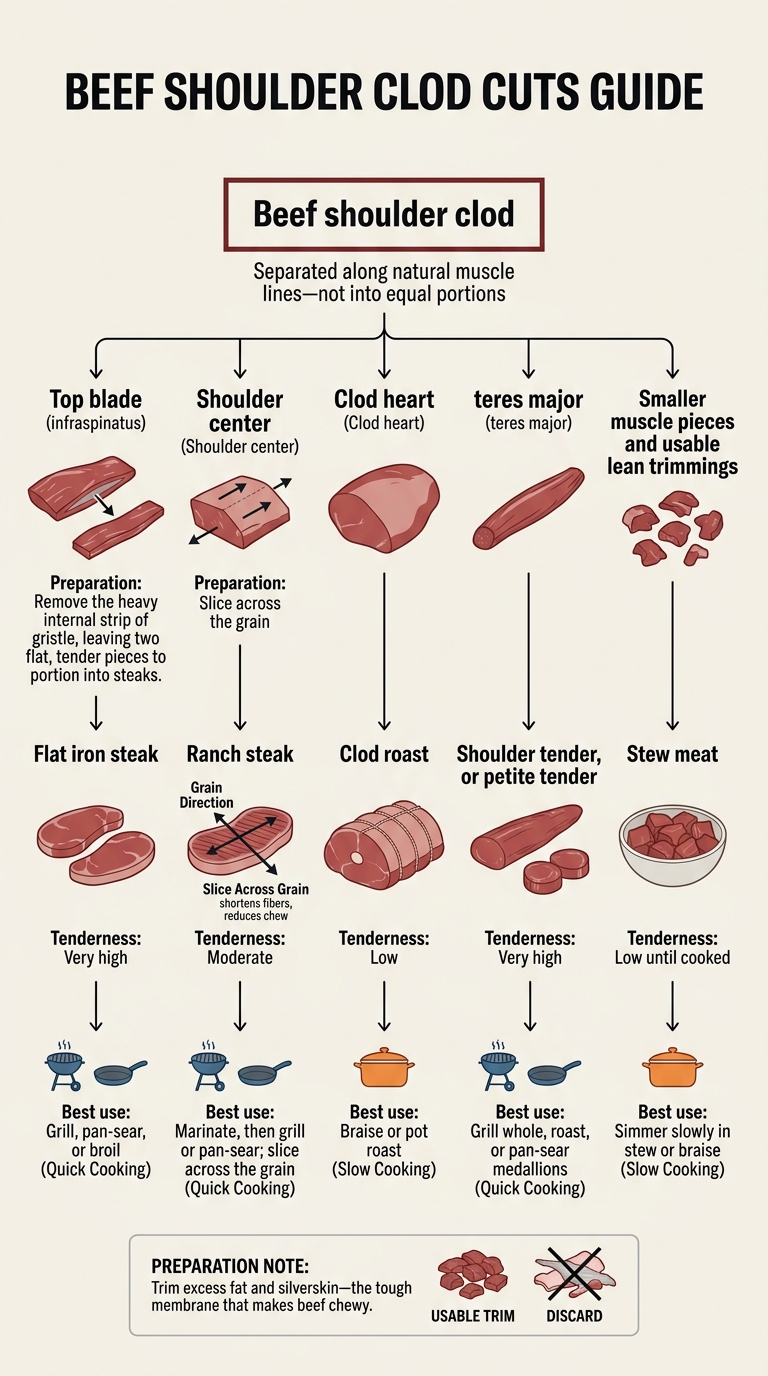
Beef Shoulder Clod: Cuts, Tenderness, and Uses
| Cut | Where It Comes From | Tenderness | Best Use |
|---|---|---|---|
| Flat iron steak | Top blade, with the center gristle removed | Very high | Grill, pan-sear or broil |
| Ranch steak | Center of the shoulder | Moderate | Marinate, then grill or pan-sear; slice across the grain |
| Clod roast | Clod heart | Low | Braise or pot roast |
| Shoulder tender (teres major) | Small muscle beneath the shoulder blade | Very high | Grill whole, roast, or pan-sear medallions |
| Stew meat | Smaller muscles and lean trimmings | Low until cooked | Simmer slowly in stew or braise |
Watch a Shoulder Clod Breakdown
Here is another look at how we separate the clod. Watch for the lean pieces set aside for stew meat and the silver skin and gristle that get trimmed away.
How to Cook Shoulder Clod Cuts
Use high heat for the tender steaks, low heat for the roasts, and long, slow cooking for stew meat.
Flat Iron and Ranch Steaks
Grill, broil or pan-sear flat iron steaks hot and fast. For whole-muscle steaks, the USDA recommends cooking to 145°F, then resting 3 minutes.
Ranch steaks are leaner and a little chewier. A citrus or vinegar marinade adds flavor. Cook them quickly and do not take them past medium. Note the grain direction before you cook so you can slice thinly against it afterward.
Clod Roast and Shoulder Tender
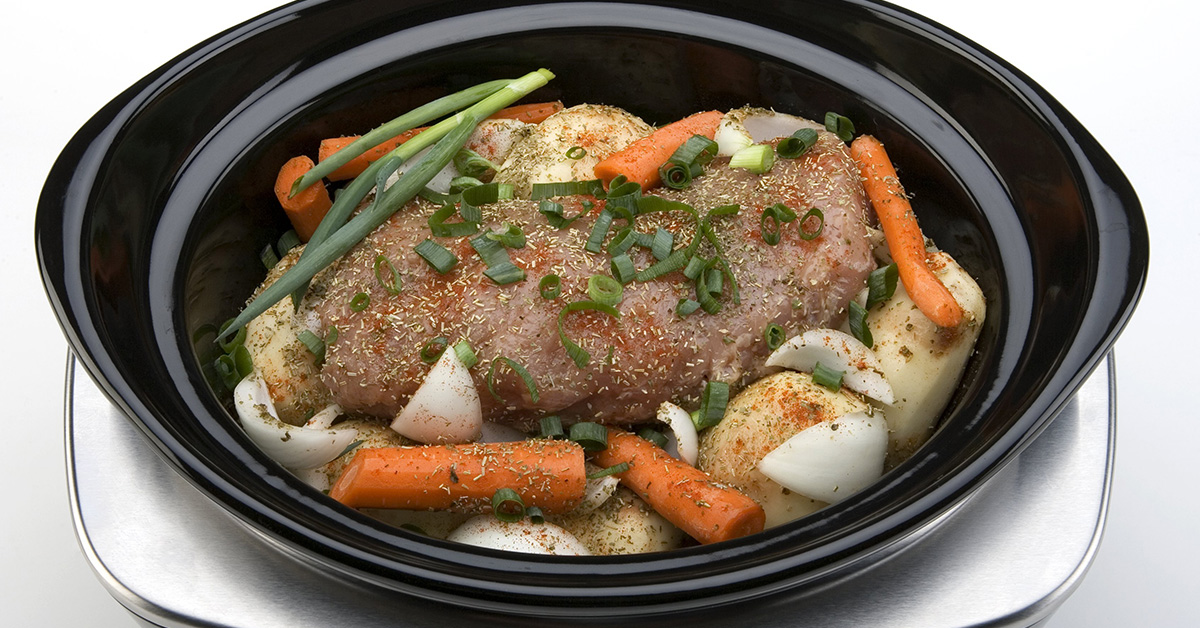
For a clod roast, sear all sides, add broth or wine, and cook it covered in a 300°F oven for roughly 3 to 4 hours, until it is fork tender.
To smoke one, cook at 225°F to 250°F, wrap it near the end, and keep going until a probe slides in easily. Rest the roast, then slice across the grain.
The shoulder tender is naturally tender, so treat it like a steak, not a roast. Grill it whole, roast it briefly, or pan-sear medallions.
Stew Meat
Small muscles and lean trimmings make great stew, chili or beef soup. Brown the cubes, then braise at 300°F or slow-cook on low for 8 to 10 hours, until fork tender.
Shoulder Clod vs. Premium Cuts: Value
Cuts from the shoulder clod usually cost less per pound than loin cuts like filet mignon or strip steak, and the clod gives you steaks, roasts and stew meat.
| What You Are Comparing | Shoulder Clod Cuts | Premium Loin Cuts |
|---|---|---|
| Price | Lower per pound | Higher per pound |
| Meal options | Steaks, roasts and stew meat | Mostly steaks and tender roasts |
| Tenderness | Varies by muscle | More consistently tender |
| Cooking | Quick or slow, depending on the cut | Usually grill or sear |
Our 5 best cuts of beef for family meal planning can help you match these cuts to weeknight dinners.

Ordering Shoulder Clod Cuts From Wild Country Meats
We do not sell a whole shoulder clod as a retail item, but you can buy the best cuts from it already trimmed and ready to cook:
- 2 (12 to 14 oz) Flat Iron Steaks, currently $18.99, on sale from $19.99
- 2 (8 to 10 oz) Teres Major Steaks, the shoulder tender, currently $15.99, on sale from $20.99
- 10 Lb Stew Meat Pack, ten 1 pound packages of lean stew meat
Prices are subject to change without notice.
Order on our buy meat page for pickup at our Cleveland store, or get $5.00 delivery on orders of $150 or more in select Oklahoma cities.

Custom Processing Your Own Beef
If you are having your own beef processed, our beef cutting order form lets you keep chuck and arm roasts in 2 to 3, 3 to 4 or 5 to 6 pound sizes, or grind them for more burger. For shoulder clod cuts that are not on the form, like flat irons or the shoulder tender, ask in the special requests box or call our Hominy location at (918) 885-6758. To plan a bigger order, see our guide to custom meat bundles.

Key Takeaways
- The shoulder clod is a large section of the chuck, not a single roast
- Cook flat iron steaks and shoulder tender hot and fast, and braise clod roasts and stew meat low and slow
- Order flat iron steaks, teres major steaks and stew meat online, or request clod cuts on your custom cut order
FAQs
How much usable beef does a whole shoulder clod give you?
A whole clod often weighs 13 to 21 pounds before trimming. Once the fat, silver skin and gristle are removed, you get flat iron steaks, ranch steaks, the shoulder tender, roasts, stew meat and trimmings for ground beef. The exact yield depends on the animal and how it is cut.
Can I break down a beef shoulder clod at home?
Yes, with a sharp boning knife and some patience. Follow the natural seams of fat and connective tissue to separate the muscles. Our breakdown videos above show where to cut. If you would rather skip the knife work, order our flat iron steaks, teres major steaks and stew meat already trimmed.
How long can I freeze shoulder clod cuts?
Frozen beef steaks and roasts keep their best quality for about 4 to 12 months at 0°F. Our meat is vacuum sealed and frozen, which helps protect quality. Use the oldest packages first.