
We have found that most households pick the wrong meat box for one simple reason: they shop by headcount, not by how they eat.
Our short answer is this: couples usually fit a 10 to 15 lb box, families of 3 to 4 often need 20 to 25 lbs, and bigger households or heavy meat eaters tend to land at 30 to 35+ lbs. If you meal prep, host often, or pack meat-heavy lunches, add 20% to 30% to that starting point.
Price and freezer space matter too. In this range, you are looking at about $81.99 to $84.99 for the small pack, $136.99 to $144.99 for the family pack, and $204.99 to $214.99 for the large pack. As a storage rule, 1 cubic foot of freezer space holds about 35 lbs of vacuum-sealed meat.
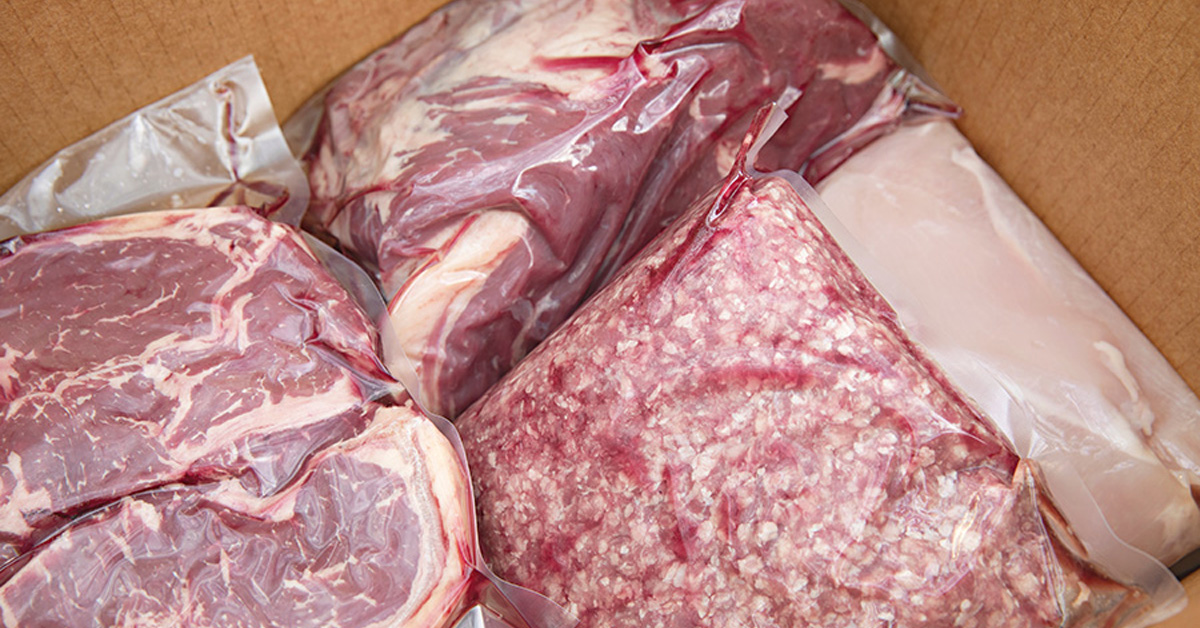
Here is the simple way we look at it:
| Box size | Best fit | Good pick when… |
|---|---|---|
| Small | Singles or couples | You cook meat a few nights a week |
| Standard | Families of 3 to 4 | You want a steady mix of weeknight staples |
| Large | Families of 5+ | You eat meat at most meals or burn through ground beef fast |
The goal is simple: buy enough for your month, not enough to crowd your freezer.
Here is how we would size it. For more tips on meat selection and preparation, check out our latest blog posts.
How to Estimate Your Household’s Monthly Meat Needs
A Simple Formula: Pounds Per Person, Per Week, Per Month
We like to start with a monthly baseline, then line it up with the right meat box for the family.
A simple rule works well here: plan on 1 lb of raw meat per adult per day when meat is the main part of most dinners. For children under 12, cut that to 0.5 lb.
Here’s the monthly estimate:
- A 2-adult, 2-kid household that cooks at home most nights usually needs 50 to 65 lbs a month
- 2 adults and 1 child usually need 40 to 50 lbs a month
- Larger families with 3 or more kids often need 70 to 90 lbs a month
If we want tighter portion planning, we can use our portion size calculator for meat.
As a quick benchmark, we plan on 6 oz per person for dinner, 10 to 12 oz per steak, and 1 lb of ground beef for tacos, chili, or casseroles.
Real-Life Factors That Change Your Monthly Total
Our monthly total can shift fast once we look at how we actually cook.
If we meal prep lunches, we should add 20% to 30% to the estimate. We also need to factor in special occasions and larger gatherings.
From there, we add those extra pounds to the baseline and match the total to a box tier.
Next, we match that monthly total to the Small, Standard, or Large box tier.
sbb-itb-5ae85c5
How Wild Country Meats Box Tiers Match Your Monthly Needs
Once we know our monthly pound estimate, picking a box tier gets pretty simple. Wild Country Meats offers three box sizes for different household needs.
2 Person Pack, Family Pack, and Deluxe Family Pack at a Glance
The table below lines up each tier with the estimates from the previous section. Meal counts are approximate. They can shift based on portion size, side dishes, and how often we turn leftovers into another meal.
| Box Tier | Approx. Pounds | Ideal Household | Est. Meals/Month | Freezer Space | Price (USD) |
|---|---|---|---|---|---|
| Small (2 Person Pack) | ~10–15 lbs | Singles or couples | 12–20 | About 0.5–1.0 cu ft | $81.99 – $84.99 |
| Standard (Family Pack) | ~20–25 lbs | Families of 3–4 | 25–35 | About 1.0–1.5 cu ft | $136.99 – $144.99 |
| Large (Deluxe Family Pack) | ~30–35+ lbs | Families of 5 or more or households that eat meat at most meals | 40–50+ | About 1.5–2.0+ cu ft | $204.99 – $214.99 |
Each box arrives vacuum-sealed, portioned, and flash-frozen, so it is freezer-ready as soon as it arrives.
Which Box Fits Your Household: Singles, Couples, Families of 4, and Larger
We suggest using the table first, then checking these household examples to narrow things down.
Singles and couples who cook meat a few times a week will usually do well with the 2 Person Pack. If we host guests now and then or want more breathing room, the Family Pack can make more sense.
For a classic family of 4, the Family Pack is usually the best middle ground. It includes 8 lbs of ground beef, four Top Sirloin steaks, a beef roast, pork steaks, pork chops, bacon, and chicken breasts.
That mix gives us room for weeknight ground beef meals, a roast dinner, and a steak night. It also helps us avoid stuffing the freezer with more meat than we can use at a comfortable pace.
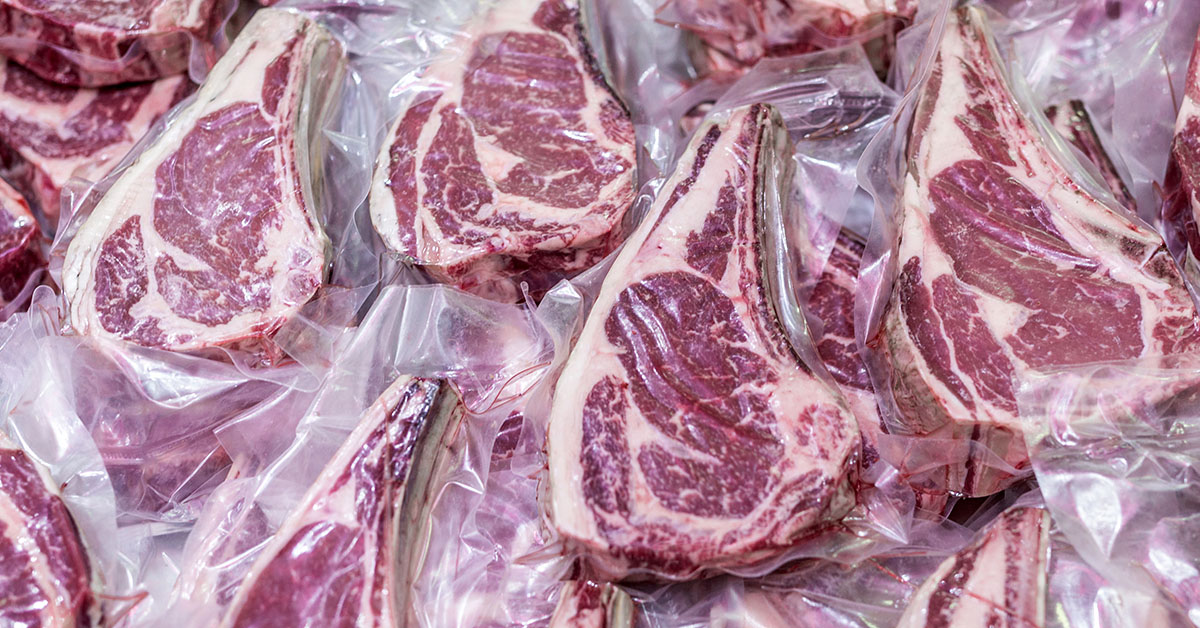
If that same family grills most weekends, packs meat leftovers for school lunches, or likes bigger portions, the Deluxe Family Pack adds four Ribeye steaks and bumps ground beef up to 10 lbs. It is also a solid starting point for families of 5 or more.
If we fall between tiers, we can alternate between the two closest sizes or order more often. That is often the easiest way to dial in the right amount before we think about freezer space and restocking frequency.

Freezer Space and Ordering Frequency: Avoiding Overbuying or Running Short
How Much Freezer Space Each Box Tier Requires
Once we know our monthly pound target, we need to check one simple thing: will the box fit in the freezer?
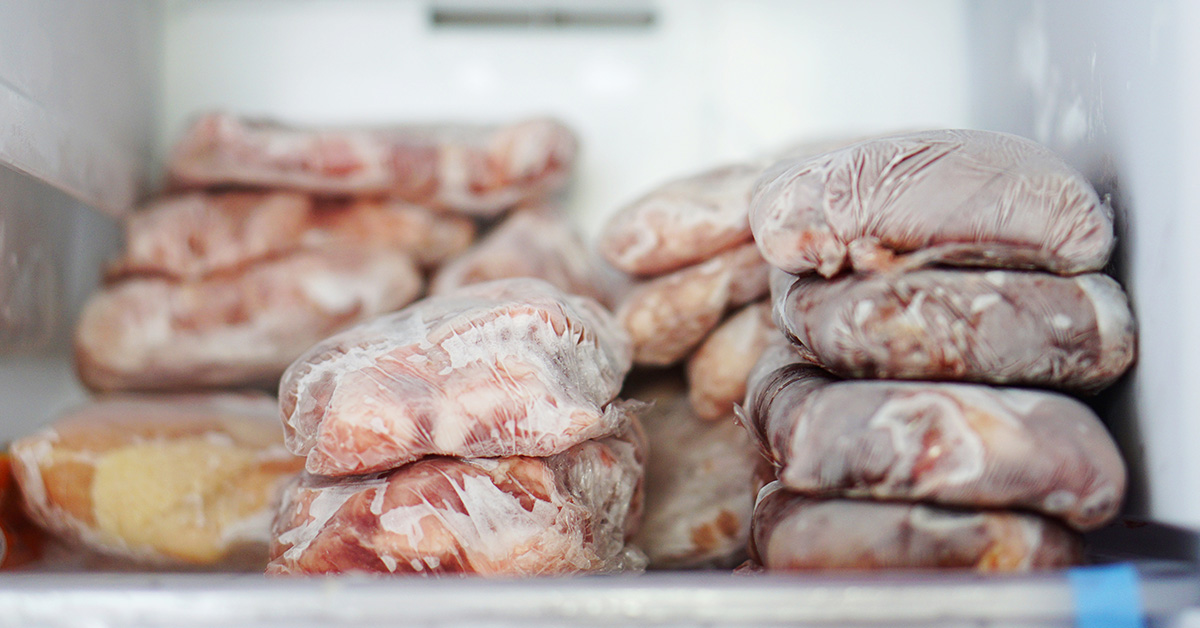
A good rule of thumb is that 1 cubic foot of freezer space holds about 35 pounds of packaged, vacuum-sealed beef. That gives us a practical way to match box size to storage.
In general, the Small box fits in most standard freezer drawers. The Standard box fits in most fridge-freezer combos. The Large box usually needs more dedicated freezer space.
That matters because a box only works when it matches both our storage space and how fast we use the meat.
For storage, we want to keep beef at 0°F and use it within about 12 months for the best quality. We also want to get everything into the freezer within 2 to 4 hours of delivery.
If the box fits, the next step is deciding how often we should restock or ordering custom meat bundles to fit our specific needs.
One-Time Stock-Up vs. Recurring Orders: Which Works Better for You
In our view, this comes down to two things:
- How fast our household uses meat
- How much freezer space we have
A one-time order every 2 to 3 months can work well when we want to stretch a box out, save it for premium meals like steaks and roasts, or buy a box that takes time to work through because freezer space is tight.
A recurring order, such as every 8 weeks, makes more sense when we want a steady flow of staples like ground beef and bacon. It can also save 10% on each order.
See how recurring orders can simplify restocking.
<iframe width="560" height="315" src="https://www.youtube.com/embed/mfEhSEGxRWs" title="Easiest way to save money on premium meat" frameborder="0" allow="accelerometer; autoplay; clipboard-write; encrypted-media; gyroscope; picture-in-picture" allowfullscreen></iframe>
Ground beef gives us the easiest way to test whether our schedule is working.
The Family Pack includes 8 pounds of ground beef, and the Deluxe Family Pack includes 10 pounds. If we run out before the next scheduled delivery, that is a plain sign that we should either order more often or move up to the next tier.
If we keep outgrowing the restock cycle, it is time to look at bulk beef.

When to Move From Meat Boxes to Bulk Beef
Signs Your Household Has Outgrown a Standard Meat Box
In our experience, the clearest sign is simple: your next order shows up too late to keep up with your household.
If the Deluxe Family Pack’s 10 pounds of ground beef and 8 premium steaks are gone well before the month ends, a standard box is no longer enough.
The same goes if we still have to buy grocery-store meat to fill the gaps. At that point, it makes sense to move to bulk beef.
A quarter beef typically yields about 80 to 110 pounds of take-home meat and needs roughly 3 to 4 cubic feet of storage. A half beef usually yields 160 to 220 pounds and needs 6 to 9 cubic feet.
So here is the practical cutoff: if we already own a chest freezer and can set aside at least 4 cubic feet for meat, we are ready for bulk beef.
We also tend to see a shift when a household goes past the largest box every month. The same is true when we want more say over our cuts and a lower long-term price per pound. In those cases, quarter, half, or whole beef usually makes more sense than placing box orders again and again.
Wild Country Meats offers quarter, half, and whole beef options, plus a custom butcher option for households that want specific cut instructions beyond what a pre-set box provides.
Here is the current price range listed by Wild Country Meats:
- Quarter beef: about $609.99 to $649.99
- Half beef: about $1,289.99 to $1,361.99
Bulk beef brings down the average price per pound and gives us more control over cuts.

Key Takeaways
We recommend using this quick checklist to decide between a bigger box and bulk beef.
- Estimate monthly pounds first. Use the how much meat you need per month breakdown and the portion size calculator for meat.
- Match your estimate to the right tier. Use the comparison table if we want to stay in a box tier. Move to bulk beef when we keep going past the largest box.
- Check freezer space before ordering. Boxes fit in most fridge-top freezers. Quarter beef needs 3 to 4 cubic feet, and half beef needs 6 to 9.
- Choose based on long-term habits. Recurring meat boxes work well for variety, lower upfront cost, or tighter freezer space. Bulk beef fits households that eat beef often and want lower long-term pricing.
- Recheck once a year. Household size and eating habits change, and our order style should change with them.
FAQs
What if I’m between two box sizes?
We start with two simple things: freezer space and how much we use in a normal week.
If space is tight, we should go with the smaller box so everything fits without a headache. A standard kitchen freezer usually holds 15 to 20 pounds.
If we have more room, the larger box can save us money over time and help us order less often. We can also track our use for a few weeks and see which size makes the most sense for us.
How do I know if recurring orders make sense for us?
Recurring orders make sense when we want meal planning to feel easier, grocery runs to happen less often, and the freezer to stay stocked with the proteins we buy most.
They tend to work best once we know how much meat our household goes through in a typical month.
Before we commit, we should check two simple things:
- How much freezer space we actually have
- How often we cook and eat those proteins
In our experience, it also helps to start small. A pre-built bundle is a low-stress way to test the convenience before we move to larger recurring orders.
When should I switch from a meat box to bulk beef?
Switching from a meat box to bulk beef makes sense once we’re comfortable with meal planning and want a lower cost per pound.
We should look at it if we buy meat on a regular basis, have enough freezer space, and want fewer trips to the store.
A quarter beef usually needs about 2 to 3 cubic feet of dedicated freezer space. In our experience, it works best when we already know our household’s steady meat needs.