
When deciding between a quarter or half beef, the choice depends on freezer space, budget, and how much beef your household consumes. Here’s a quick breakdown:

- Quarter Beef: Provides about 100–140 pounds of meat, needs 4–5 cubic feet of freezer space, and lasts 6–8 months for a small family. It’s a good option for smaller households or first-time bulk buyers.
- Half Beef: Offers 200–250 pounds of meat, requires 8–11 cubic feet of freezer space, and can last 10–12 months for a family of four. This option includes a greater variety of cuts and a slightly lower cost per pound.
Quick Comparison:
| Factor | Quarter Beef | Half Beef |
|---|---|---|
| Packaged Weight | 100–140 lbs | 200–250 lbs |
| Freezer Space Needed | 4–5 cubic feet | 8–11 cubic feet |
| Duration (Family of 4) | 6–8 months | 10–12 months |
| Cost Per Pound | ~$6.75–$7.00 | ~$6.30 |
For smaller families or limited freezer space, a quarter beef is practical. Larger families or frequent beef eaters benefit more from the variety and savings of a half beef. Wild Country Meats offers custom processing and delivery options to simplify the process.
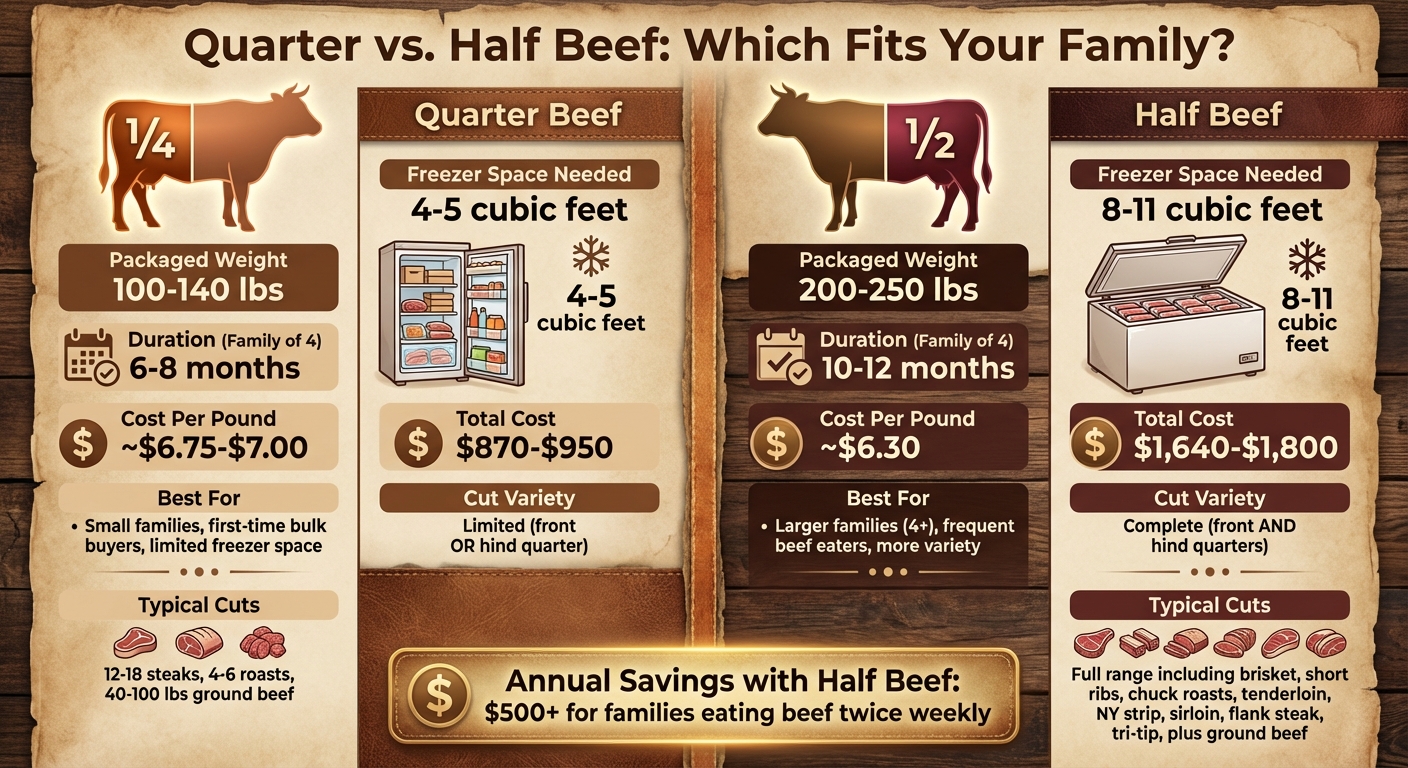
Quarter vs Half Beef Comparison: Weight, Storage, Duration and Cost
Quarter Beef: Size, Cuts, and Storage
Weight and Cut Selection
Buying a quarter beef typically provides between 80 and 110 pounds of packaged meat, though larger animals can yield up to 140 pounds. The weight depends on factors like the animal’s size and whether it was grass-finished or grain-finished. Many processors now offer "mixed quarters", combining cuts from both the front and hind sections. This gives you a wider variety of cuts without having to choose one section over the other.

Here’s what you can expect: 12–18 steaks (such as ribeye, sirloin, or occasionally filet and strip steaks), 4–6 roasts (like chuck, rump, round, or tri-tip), and 40–100 pounds of ground beef. You’ll also get extras like short ribs, stew meat, fajita cuts, and soup bones. The exact mix depends on your preferences and the instructions you give your processor. For example, at Wild Country Meats, you can use a detailed cut sheet to specify things like steak thickness (1 inch or 1½ inches), roast sizes, and how the ground beef is packaged.
Generally, about one-third of a quarter beef is made up of steaks and roasts, while the other two-thirds consists of ground beef and stew meat. This combination is perfect for balancing special meals with everyday cooking. However, the variety of cuts means you’ll need to plan your freezer space carefully. Let’s look at how much storage you’ll need.
Freezer Space Needed
To store a quarter beef, you’ll need 4–6 cubic feet of freezer space. This is about the size of a small chest freezer, typically in the 5–7 cubic foot range.
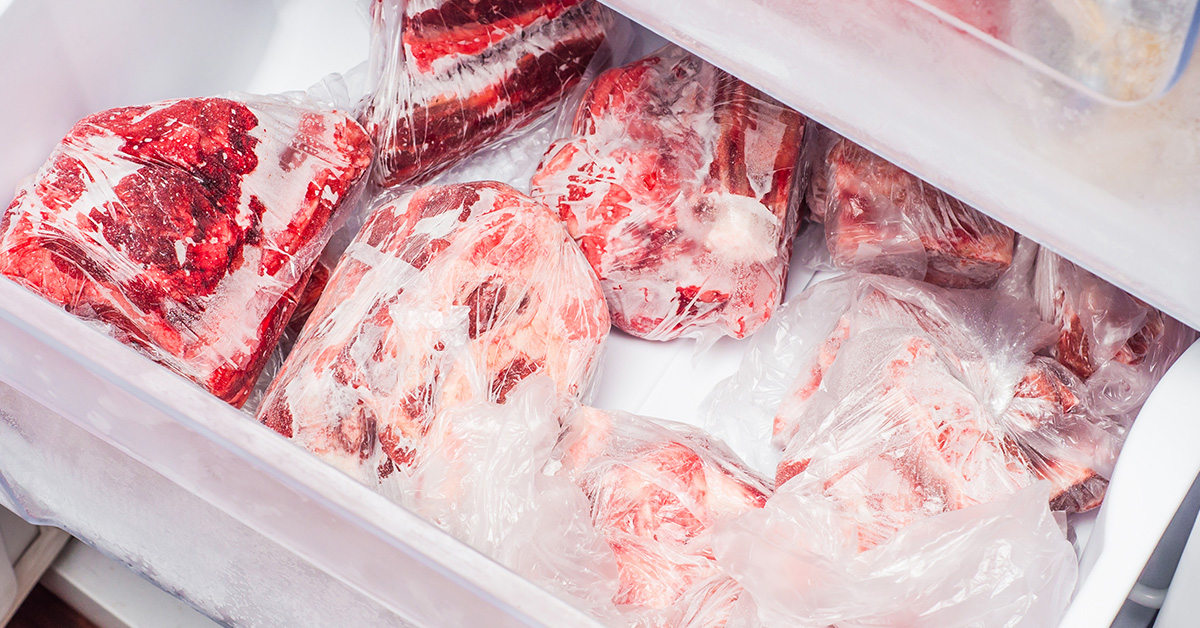
This manageable storage size makes a quarter beef an excellent option for smaller families, couples, or anyone trying bulk buying for the first time. You won’t need to invest in a massive freezer or reorganize your entire storage area. Most processors vacuum-seal and label each package, making it easy to organize – roasts can go on the bottom, with steaks and ground beef stacked on top for quick access.
For a small family enjoying beef 2–3 times a week, an 80–110 pound quarter can last 4–6 months. This gives you plenty of time to enjoy all the cuts without worrying about meat sitting in the freezer for too long.
Half Beef: Size, Cuts, and Storage
Weight and Cut Selection
When choosing a half beef, it’s important to think about both the variety of cuts you’ll receive and the freezer space you’ll need to store it all.
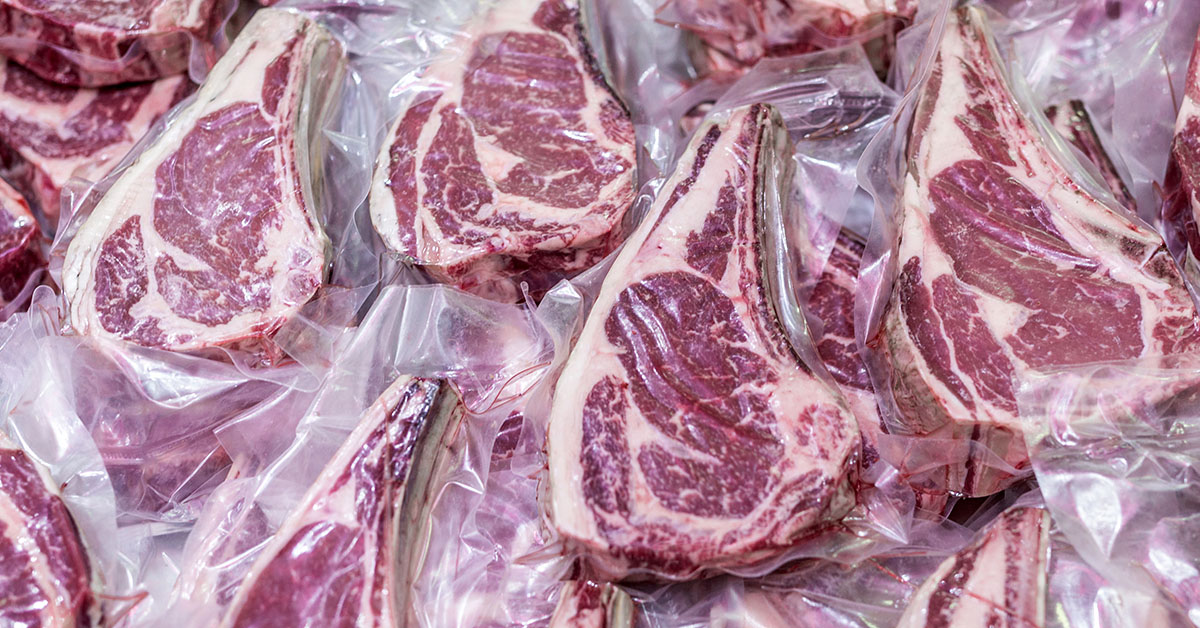
A half beef includes one entire side of the animal, covering both the front and hind quarters. On average, this yields 160–250 pounds of meat, depending on the animal’s size. With a half beef, you get a full range of cuts. From the front quarter, you’ll enjoy options like brisket, short ribs, and chuck roasts. The hind quarter offers premium selections such as tenderloin, New York strip steaks, sirloin, flank steak, and tri-tip. Additionally, you’ll receive a generous supply of ground beef, stew meat, soup bones, and shanks. This mix ensures you’re set for everything from quick weeknight meals to long, slow-cooked dishes.
At Wild Country Meats, you can customize your order to suit your preferences. Choose steak thickness, decide between T-bones or separating tenderloins and New York strips, and specify ground beef portions. You can even opt for specialty processing like sausage making or smoking. To ensure transparency, every animal is tagged and photographed, so you know exactly what you’re getting. Once you’ve made your selections, make sure you have enough freezer space to keep these cuts in top condition.
Freezer Space Needed
To store a half beef, you’ll need 8–12 cubic feet of freezer space. This is about the size of a standard chest freezer, which can easily hold over 200 pounds of vacuum-sealed, labeled packages. Organizing your freezer by cut type – like grouping steaks, roasts, and ground beef separately – can make meal planning much simpler.
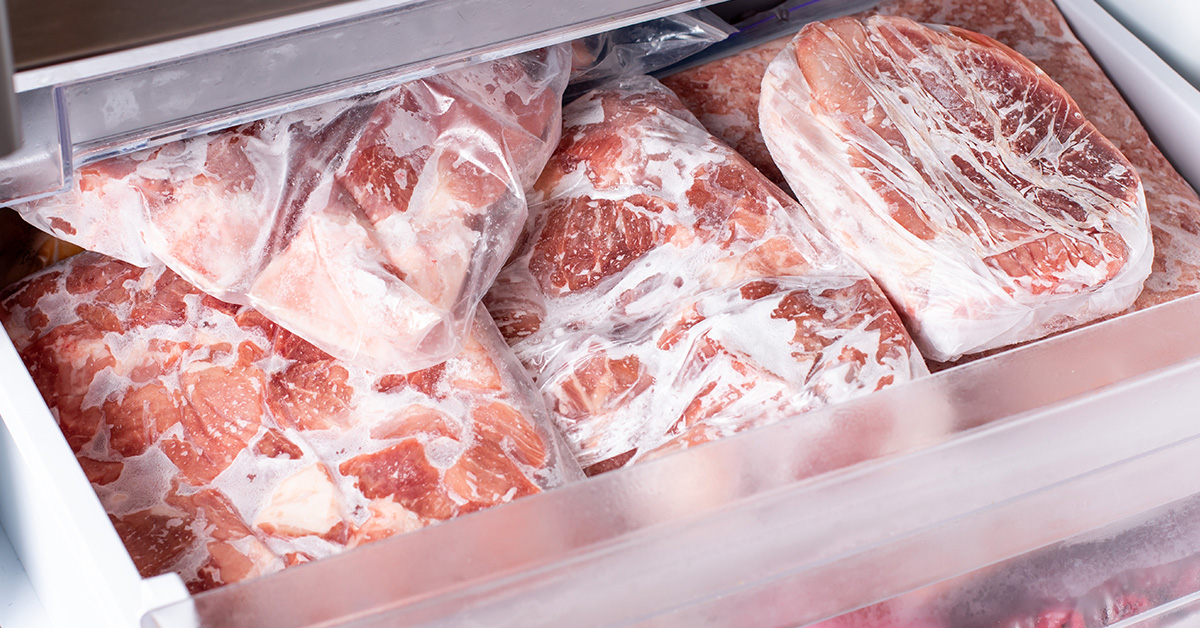
A half beef is a great choice for larger families or anyone who eats beef regularly. For a family of four, 200–250 pounds of beef typically lasts 10–12 months. This amount gives you flexibility for both everyday meals and special occasions, ensuring you always have a variety of cuts on hand – from premium steaks for celebrations to ground beef for quick dinners.
Beef cow, quarter or half, what you get and cost
Quarter vs. Half Beef: Side-by-Side Comparison
Choosing between a quarter and half beef comes down to weight, variety of cuts, freezer space, and how long the meat will last for your meals.
A quarter beef gives you about 100–125 pounds of packaged meat, while a half beef provides around 200–250 pounds. This difference impacts not only storage requirements but also the range of cuts you’ll receive and how long the meat will last. The table below breaks this down for a family of four.
Comparison Table
Here’s how a quarter and half beef compare for a typical family of four:
| Factor | Quarter Beef | Half Beef |
|---|---|---|
| Packaged Weight | 100–125 lbs | 200–250 lbs |
| Typical Cuts | Limited to either the front or hind quarter (e.g., more roasts or more steaks, depending on the cut) | Includes cuts from both the front and hind quarters, such as brisket, chuck roasts, short ribs, tenderloin, NY strip, sirloin, flank steak, and tri-tip |
| Freezer Space Needed | 4–5 cubic feet | 8–11 cubic feet |
| Meal Duration (Family of 4) | 6–8 months | 10–12 months |
The half beef provides a greater variety of cuts because it includes meat from both the front and hind quarters. With a quarter beef, your selection is more limited. For example, a front quarter typically includes more roasts and braising cuts, while a hind quarter leans toward steaks.

For families that eat beef regularly – about 2–3 times per week – a quarter beef lasts roughly 6–8 months, with 15–20 pounds consumed per month. A half beef, on the other hand, is perfect for those planning for a full year of meals. It offers more variety and often comes at a better price per pound.
sbb-itb-5ae85c5
Cost and Value
Price Per Pound and Total Cost
When it comes to buying beef in bulk, upfront cost is the major factor to consider. For a quarter beef, prices typically range from $870 to $950 based on a hanging weight of around 200–220 pounds. A half beef, on the other hand, costs approximately $1,640 to $1,800, with a hanging weight of 400–440 pounds. If you opt for extras like dry aging or custom cuts, the price for a half beef can climb to $2,500–$2,900.
Let’s break it down further: the price per pound of finished meat varies slightly. Quarter beef often costs around $4.35 per pound, while half beef is priced slightly lower at $4.10 per pound – a difference of $0.25 per pound. Over a 400-pound hanging side, that small difference adds up to about $100 in savings before processing fees are factored in. After accounting for the typical yield (60–65% from hanging weight to packaged meat), the cost per pound of take-home meat averages $6.30 for a half beef, compared to $6.75–$7.00 for a quarter beef.
For families that consume beef twice a week, investing in a half beef could mean $500 or more in annual savings. Plus, the ability to customize your processing options makes this choice even more economical in the long run.
Custom Processing Options at Wild Country Meats
Wild Country Meats takes those savings a step further by offering custom meat processing, giving you the flexibility to tailor your beef to your exact preferences. You can choose steak thickness, roast sizes, and even the weight of ground beef packages – perfect for smaller households that prefer 1-pound packs or larger families that need 1.5- to 2-pound packs. This level of customization helps minimize waste and ensures you’re only defrosting what you need for your meals.

Beyond standard cuts, you can opt to turn selected trim into specialty items like sausage, snack sticks, or jerky, adding variety to your freezer stock. All processing is USDA-inspected, ensuring full traceability. Each animal is tagged, photographed, and inventoried, so you know exactly where your beef comes from. To guarantee tenderness, the beef is aged for at least 21 days, and vacuum sealing or tight wrapping keeps it freezer-ready for months.
For added convenience, Wild Country Meats offers delivery within a 50-mile radius of their Cleveland, Oklahoma location for just $5. This includes nearby areas like Tulsa, Broken Arrow, and Stillwater.
How to Choose the Right Option for Your Family
What to Consider
Start by checking your freezer space. A quarter beef typically needs 4–5 cubic feet, while a half beef requires 8–11 cubic feet. If space is tight, a quarter beef is a more practical choice and avoids overcrowding.
Think about how often you cook. If you’re preparing meals 3–5 times a week, you might use up a quarter beef in 6–8 months. On the other hand, if you cook less frequently, a quarter’s smaller quantity and balanced mix of cuts reduce the risk of keeping meat in storage for too long.
Family size also plays a big role. For smaller households of two to three people, a quarter beef – providing about 100–140 pounds of meat – can last six to eight months. Families with four or more members, especially those with growing kids, often find a half beef more suitable. With around 200–275 pounds of meat, a half beef can supply meals for 10–12 months or longer. These recommendations also tie into freezer space and the variety of cuts available.
By keeping these factors in mind, you can select the option that best matches your family’s needs and lifestyle.
Recommendations by Family Type
For small households, couples, or those new to buying meat in bulk, a quarter beef is a great starting point. It’s easier to store, has a lower upfront cost, and offers a good variety of cuts.

Larger families of four or more who have sufficient freezer space should consider a half beef. The larger quantity not only provides meals for up to a year but also includes a wider selection of premium cuts. Plus, Wild Country Meats offers custom processing to tailor the cuts to your preferences.
Conclusion
Deciding between a quarter or half beef comes down to your specific needs. The key factors to consider are freezer space, family size, and cooking habits. A quarter beef, which provides around 100–140 pounds of meat, works well for smaller households or those trying bulk beef for the first time. It requires only 4–5 cubic feet of freezer space and usually lasts 6–8 months. On the other hand, a half beef offers 200–275 pounds, needs 8–11 cubic feet of storage, and is better suited for families who cook frequently, offering more variety and a lower cost per pound.
Wild Country Meats makes the process easy. Their custom processing lets you choose exactly how your beef is prepared – from steak thickness to ground beef packaging. This level of control ensures you get exactly what you need, avoiding unnecessary waste.
With USDA-inspected facilities and beef aged for at least 21 days to ensure tenderness, Wild Country Meats has built a reputation for quality. Chris Gabriel, a third-generation butcher whose family has been in the meat processing business since 1968, emphasizes their commitment to excellence:
We don’t seek to satisfy our customers. We seek to amaze them.
For families in the Tulsa area and beyond, Wild Country Meats also offers convenient delivery and pick-up options. Whether you’re in Tulsa, Broken Arrow, Stillwater, or anywhere within 50 miles of their Cleveland location, you can choose hassle-free pickup or delivery for just $5. Visit their stores in Hominy or Cleveland, or order online at https://wildcountrymeats.com to find the perfect quarter, half, or whole beef bundle for your family.
FAQs
How can I figure out if I have enough freezer space for a quarter or half beef?
When planning to store a quarter beef, you’ll generally need 1.5 to 2 cubic feet of freezer space. For a half beef, aim for 3 to 4 cubic feet. To make sure you have enough room, measure the inside dimensions of your freezer and calculate its total capacity in cubic feet. This way, you can avoid overcrowding and keep your beef stored properly.
What’s the price difference between buying a quarter beef and a half beef?
The main difference in price between a quarter beef and a half beef boils down to the amount of meat you’re buying and the price per pound. A half beef requires a larger upfront investment, but it usually comes with a lower cost per pound. This makes it a more economical choice for bigger households or anyone looking to stock their freezer for the long haul. On the other hand, a quarter beef is ideal for smaller families or those with limited freezer space.
Prices can vary based on market conditions and processing fees, but both options offer a budget-friendly way to enjoy high-quality beef that’s custom-processed to suit your preferences.
Can I choose how my beef is cut and packaged when ordering from Wild Country Meats?
Wild Country Meats lets you customize your beef order exactly how you like it. You can choose the specific cuts – whether it’s steaks, roasts, or ground beef – and even select the thickness or portion sizes that work best for you.
They also offer flexible packaging options to fit your storage and meal prep needs. Whether you’re planning meals for a big family or prefer smaller portions, they make it easy to get exactly what you need.