
We have found that this one is simple: a side of beef and a half cow mean the same purchase.
If you are buying bulk beef, both terms point to one half of the animal, split lengthwise. We usually see "side of beef" from butchers and "half cow" from shoppers, but the amount of meat is the same.
What matters most for you is not the label. It is yield, freezer space, cut choices, and price. In most cases, a half side billed at about 300 to 400 pounds hanging weight ends up at roughly 200 to 250 pounds packaged, or about 60% to 65% of hanging weight.
| Term | What we mean |
|---|---|
| Side of beef | One half of the carcass |
| Half cow | The same half, phrased in plain language |
| Quarter beef | Half of that half |
Here is the short version we want you to keep in mind.
- Yes, they are the same thing
- You pay based on hanging weight in many custom orders
- Your take-home pounds will be lower than the billed weight
- Bone-in vs boneless choices change your final boxes
- Most households need about 8 to 12 cubic feet of freezer space, sometimes more
In our experience, that is the part that clears up most of the confusion fast.
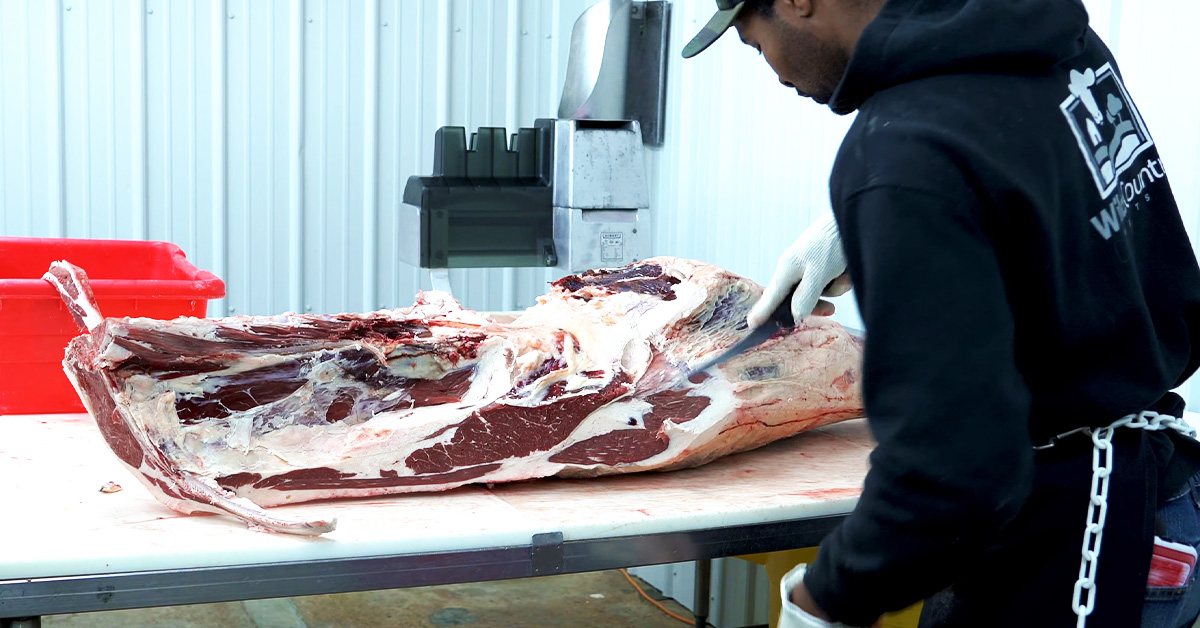
Buying Half a Cow in 2026 | Is It Actually Worth It?
Side of Beef vs Half Cow: Are They the Same Thing?
We use these terms interchangeably:
| Term | What It Means | Who Uses It |
|---|---|---|
| Side of beef | One half of the carcass, split down the backbone | Butchers and processors |
| Half cow / half beef | One half of the carcass, split down the backbone | Buyers and consumers |
| Quarter beef | Half of a side; front, hind, or split quarter | Smaller households |
That wording matters because price and yield are based on carcass weight, not just the boxes that show up in your freezer.
Why Butchers and Buyers Use Different Terms
Butchers name the carcass. Buyers name the purchase.
In the processing plant, carcasses hang on the rail and get divided into sides, quarters, and primals. Most buyers picture the live animal instead, so "half a cow" sounds more natural in day-to-day talk.
Wild Country Meats describes a half cow as one side of a beef carcass split down the backbone.
A quarter beef is half a side, usually a front, hind, or split quarter. It is still a practical mixed order with steaks, roasts, and ground beef, just in a smaller amount than a full side.

The Short Answer for First-Time Bulk Buyers
A side of beef is the same as a half cow.
If we order a side of beef from Wild Country, we are buying one complete side of the animal, with all the cuts from that half. If we see buy half a cow online, it means the same thing.
The next piece to watch is yield: hanging weight versus take-home weight.
Hanging Weight vs Take-Home Weight: What a Side of Beef Actually Yields
When we buy a side of beef, three weights matter: live weight, hanging weight, and packaged weight.
Live weight is the animal before slaughter. Hanging weight is the carcass after dressing, before cutting. Packaged weight is what we actually bring home after aging, trimming, and wrapping.
Here’s the part that trips people up: billing is based on hanging weight, not freezer weight. So the number on the invoice will look higher than the pounds that end up in our freezer. That yield also shapes the cuts we get and what we pay.
How Much Packaged Meat to Expect From a Side of Beef
| Weight Stage | Typical Range (Side of Beef) | What It Means |
|---|---|---|
| Hanging weight | 300–400 lb | The weight we are billed on |
| Packaged (take-home) | ~200–250 lb | What ends up in our freezer |
| Yield | ~60–65% of hanging | Normal loss to bone, fat, and moisture |
Bone-in cut sheets usually give us more pounds. Boneless cut sheets usually give us less. Heavy trim can push the total down a bit more.
If we want the full breakdown, we can review what’s included in a half cow and line up the order with how our household actually eats.
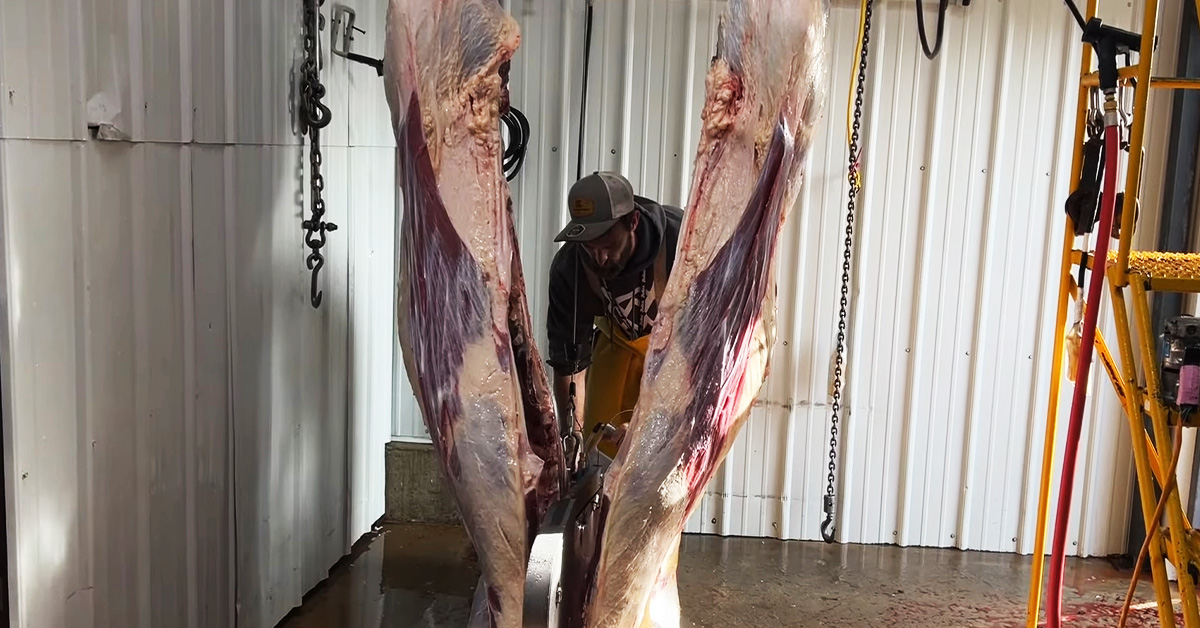
Why the Final Boxes Weigh Less Than the Hanging Side
The weight drops in two main steps.
First, slaughter and dressing remove the hide, head, organs, and lower legs. That brings the animal down to about 60–63% of its live weight. That number is the hanging weight.
Second, the butcher cuts away bones, extra fat, and connective tissue. Aging also pulls out moisture. That is why the final boxes weigh less than the hanging side. The missing pounds are mostly bone, fat, and moisture removed during processing.
A simple rule of thumb works well here: multiply hanging weight by 0.60 to 0.65 to estimate take-home pounds. So if we start with a 350 lb hanging side, we should plan for about 210 to 228 lb of packaged beef.
"The amount of take-home meat is generally 50–60% of the carcass weight, and the carcass weight is generally 55–62% of the live weight." – Wild Country Meats
That yield shapes the cut mix and the 2026 price. Next, the cut mix and 2026 Oklahoma pricing.
This video shows how a side of beef becomes the boxed cuts we take home. We can watch how a side moves through custom processing from the rail to the final boxes:
sbb-itb-5ae85c5
Side of Beef Cuts and 2026 Oklahoma Pricing
Next, we need to look at the cut mix and the price.
What Cuts Come From a Half Cow
A side of beef gives us a mix of steaks, roasts, ground beef, and a few extra cuts. In most cases, ground beef makes up the biggest share by weight.
A typical cut sheet looks like this:
| Cut Category | Specific Cuts | Approximate Quantity |
|---|---|---|
| Steaks | T-bone, Porterhouse, ribeye, top sirloin, tenderized round | 56 individual steaks |
| Roasts | Chuck, arm, rump | 10 roasts (~2.8 to 3 lb each) |
| Ground Beef | 80% lean hamburger | 72 lb (1 lb packages) |
| Specialty/Other | Whole trimmed brisket | 1 brisket (~7.5 to 8 lb) |
Actual totals can shift based on trim level, bone-in choices, roast size, and steak thickness. That is why we suggest reviewing what’s included in a half cow before we place an order.
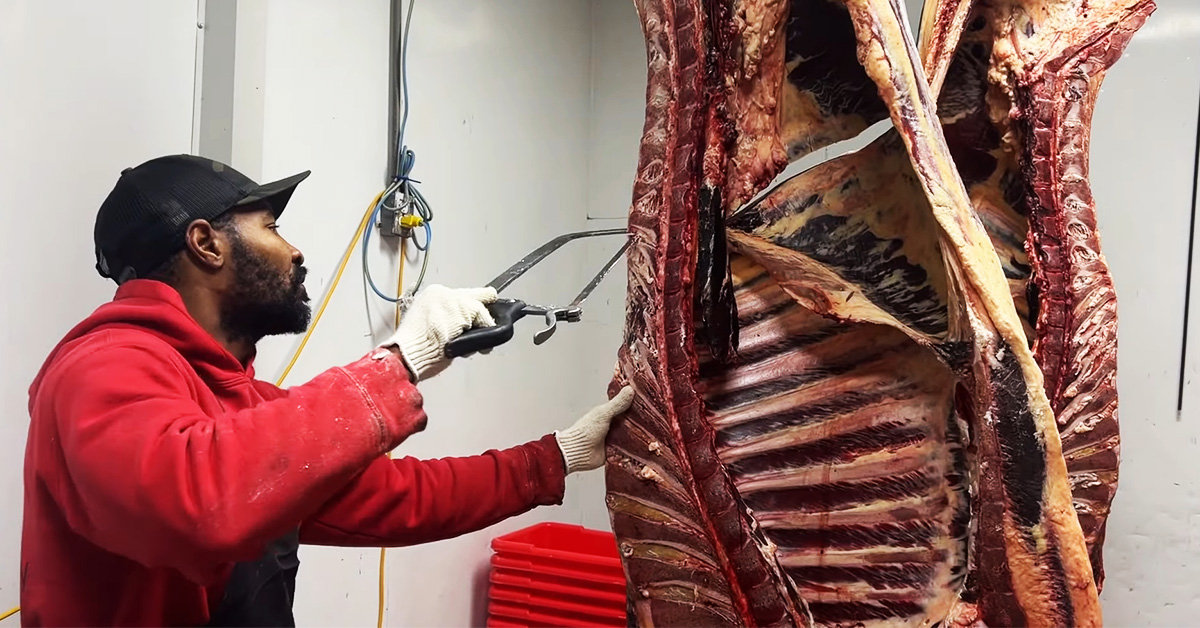
How Side of Beef Pricing Works in 2026
In Oklahoma, 2026 side-of-beef pricing usually follows one of two models: a flat-rate cut bundle or a custom hanging-weight order. Processing fees may be built into the price, or they may show up as a separate charge.
Wild Country Meats lists the standard side at $1,289.99 for the 80% lean package and $1,361.99 for the 90% lean version. The custom swinging side package is $1,999.99 and includes all processing fees for a carcass averaging 350 to 370 lb hanging weight.
Across Oklahoma, hanging-weight pricing often runs $5.00 to $6.00 per lb. That puts many half-cow totals in the $1,500 to $3,500 range, depending on carcass size and processing choices.
The 90% lean package costs more because more fat gets trimmed away. If we want a set total and fewer moving parts, the flat-rate package is the simpler pick. If we want more control over steak thickness, roast size, and lean ratio, the custom swinging side package gives us more choice.
Before ordering, we should check freezer space and pick a cut sheet that fits our household.
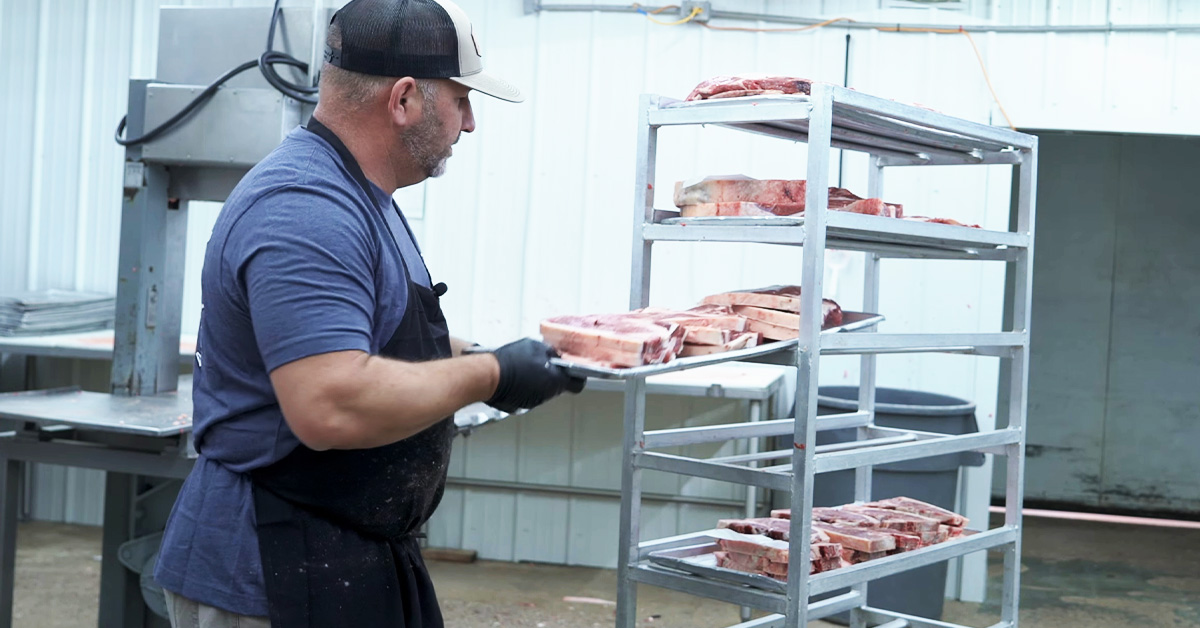
Freezer Space and Cut Sheet Planning for a Side of Beef
Once price and yield are set, storage becomes the next hard limit.
How Much Freezer Space a Side of Beef Needs
For Wild Country’s standard side package, we should plan for about 8 to 12 cubic feet of freezer space. If we order a custom swinging side with a take-home yield of 210 to 240 lb, we will need more room, usually 12 cubic feet or more.
| Take-Home Weight | Suggested Freezer Space |
|---|---|
| ~180 lb (average custom side) | 8–12 cu ft |
| 210–240 lb (custom swinging side) | 12+ cu ft |
In our experience, chest freezers handle a side more easily than uprights. The open interior gives us more room to stack packages without fighting shelves and narrow compartments.
If we add bone-in cuts, soup bones, or organ meats, we should plan for the high end of the range. Those irregular shapes do not stack as neatly, so they leave more empty space between packages.
How to Pick a Cut Sheet That Works for Your Household
Once freezer space is locked in, the cut sheet shapes the final mix of steaks, roasts, and ground beef.
The four biggest choices are steak thickness, roast size, bone-in or boneless, and how much trim goes to ground beef. Bone-in cuts and organ meat increase take-home weight. Boneless cuts and skipping organ meat bring it down.
We have found that grilling households often want more steaks. Households that lean on slow cookers and Sunday roasts usually want more chuck and arm roasts.
If freezer space is tight, we recommend more ground beef and more boneless cuts. Ground packages stack cleanly and use space better. Custom processing lets us set those details before the side is cut.
That is the value of custom processing: it turns the same side of beef into the exact box mix our household needs.

How to Order a Side of Beef From Wild Country Meats
Once we have our freezer space sorted out and know how we want the beef cut, the ordering part is pretty simple.
At Wild Country, we have two options: the preset package or the custom swinging side.
The Ordering Process, Step by Step
Wild Country offers two distinct paths: the pre-set side of beef package and the Custom Swinging Side of Beef.
The pre-set package costs $1,289.99 for 80% lean or $1,361.99 for 90% lean. It averages about 154 lb of take-home beef and is usually ready in about 5 days.
The custom option costs $1,999.99, and Wild Country requires a $375.00 deposit when we place the order.
After we pay that $375.00 deposit, the butchers call within 1 to 2 days to go over the cut sheet. That call covers steak thickness, roast size, bone-in or boneless choices, and whether we want extras like soup bones or organ meats.
Custom processing usually takes 3 to 4 weeks from deposit to pickup.
Before that call, it helps to review what’s included in a half cow and custom processing. That way, we can give clear instructions instead of making rushed choices on the spot.
When the order is ready, we need to schedule pickup and make sure the freezer is at 0°F or below before we head out.
To reserve a side, the buy half a cow online page is the place to start for both options.

Key Takeaways
Here’s the short version:
- A side of beef equals a half cow. "Side" is the butcher’s term, while "half cow" is what most people say. Both mean the same half of the animal and the same amount of beef.
- Hanging weight is not take-home weight. A side with a hanging weight of about 350 to 370 lb may yield roughly 210 to 240 lb of packaged beef for custom orders. The pre-set package averages about 154 lb.
- Cut sheet choices change the final mix. More boneless cuts and less organ meat lower take-home weight. Bone-in cuts and extras push it higher.
- Freezer space comes first. We need 8 to 12 cubic feet ready in a dedicated chest or upright freezer at 0°F or below before pickup.
FAQs
How much beef will I actually take home?
Your take-home amount depends on how the beef is processed and what is included.
At Wild Country Meats, the standard beef bundle averages 154 pounds of take-home beef.
We base that total on the cuts most people expect to bring home: steaks, roasts, and ground beef.
When you see higher advertised weights, like 190 to 220 pounds, those totals often include organ meats, tongue, and soup bones. Those items are not typically part of the standard bundle.
How big of a freezer do I need?
For a side of beef, which is the same as a half cow, we usually plan for 8 to 12 cubic feet of freezer space.
A 7-cubic-foot freezer can hold it. That said, we find a 10-cubic-foot unit gives us more room to sort and stack cuts without turning the whole thing into a game of Tetris.
We usually prefer chest freezers for bulk storage because they use less energy and do a better job of holding temperature.
We also recommend plugging in the freezer at least one week before delivery so it is fully chilled.
Should I choose bone-in or boneless cuts?
It depends on your freezer space and what works best for us in the kitchen.
Boneless cuts take up less room, so they’re easier to stack, organize, and store. If freezer space is tight, that can make a big difference.
Bone-in cuts, like T-bone or porterhouse steaks, feel more classic, but they need more space.
We can choose either bone-in or boneless on our custom cut sheet based on how we like to cook and how much room we have to store everything.