
We know that more people want to understand where their food comes from, especially their meat. Transparency matters: 80% of consumers believe tracking food origins is key to safety, and many are willing to pay extra for clear labeling. That is why we are committed to showing every step of the beef processing journey.
At Wild Country Meats, we have built a reliable system that ensures the meat you take home is from the same animal you bring in. From receiving livestock to custom cutting and packaging, we document every step. Our video takes you through the entire process: from humane slaughter methods to USDA inspections, dry-aging, and breaking down the carcass into cuts tailored to your preferences.
We also believe local processing makes a big difference. It keeps quality control in our hands, supports local farmers, reduces transportation stress on animals, and boosts community economies. By working directly with ranchers, we ensure better meat and a stronger connection between producers and customers.
Ready to see how we do it? Schedule your appointment today and experience our care and precision firsthand.

Watch the Complete Cow Processing Video
The Complete Journey: Livestock to Packaged Beef
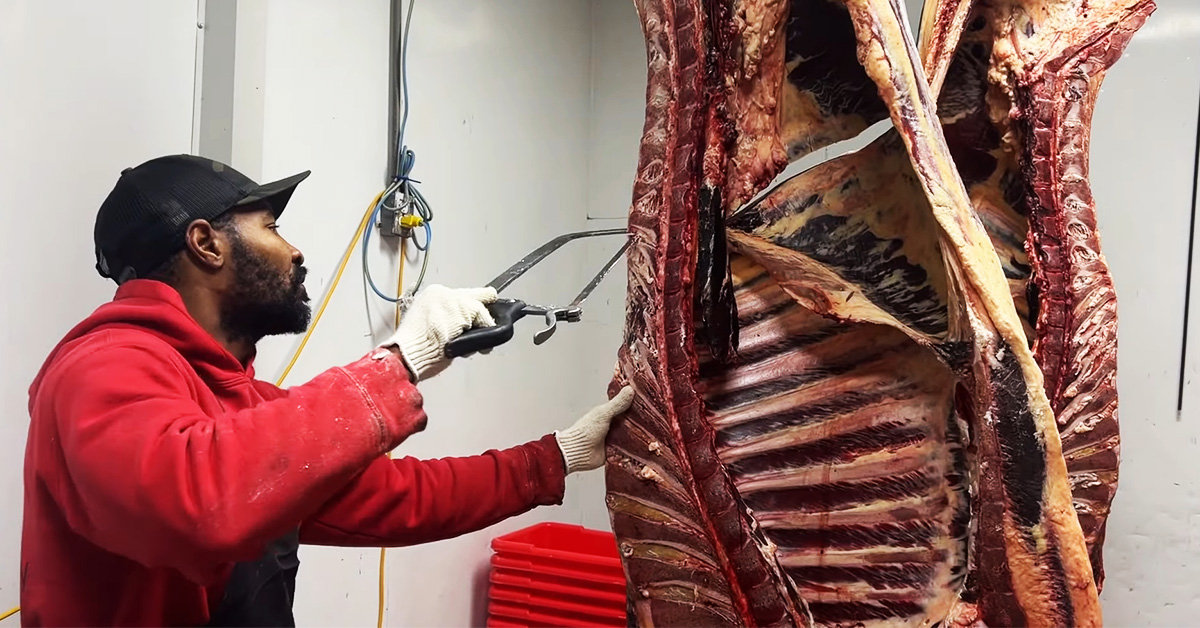
Take a look at our comprehensive walkthrough, covering everything from the equipment we use to the step-by-step workflow. The video showcases each critical stage: stunning, exsanguination, skinning, evisceration, splitting, and cooling. These steps have been part of our process since Chris Gabriel founded the company in 1998. Keep reading to see how each phase is carried out in detail.
What the Video Shows You
The video provides a close look at our humane slaughter process, which starts with a captive bolt stunning device. This ensures the animal is unconscious before any further steps are taken. As The Bearded Butchers explain:
Humane slaughter is the process of killing an animal in a way that minimizes pain and suffering, as well in compliance with USDA standards.
You’ll see our team perform every step, from severing the jugular vein and carotid artery to bleed the animal, to removing the hide, completing evisceration, and splitting the carcass into sections. The inspection process is also highlighted, where USDA personnel carefully examine the head, organs, and carcass surfaces to confirm everything meets federal safety standards.
The video has received a 4.5 out of 5-star rating from verified viewers, who praised it as "extremely informative" and "a great example of the slaughtering process done well".
sbb-itb-5ae85c5
Cutting an entire Beef (Start-to-Finish) | Processing Facility
How We Process Beef: Step by Step
Step 1: Receiving and Inspecting the Animal
Our process begins by receiving livestock raised on open pastures. Before any processing starts, we collaborate with local ranchers to ensure each animal meets our strict quality standards. These animals typically weigh between 1,000 and 1,200 pounds upon arrival. This weight is crucial for planning the processing workflow and ensuring we deliver the expected yield. This initial inspection lays the foundation for our humane and efficient processing methods.
Step 2: Slaughter Methods and Safety Standards
Once inspected, we proceed to a humane and regulated slaughter process. We comply with the Federal Meat Inspection Act and the Humane Methods of Slaughter Act, which require government personnel to oversee all meat intended for sale. Our goal is to make this process as stress-free as possible by training our team in calm handling techniques and reducing environmental stress.
As Grass Roots Farmers’ Cooperative highlights:
"The number of people available to support the harvesting process is often the most important factor in creating as much animal comfort as possible."
Our smaller facility allows for more individual attention, with a higher ratio of workers to animals compared to large commercial plants. This ensures a more attentive and humane process.
Step 3: Breaking Down the Carcass and Custom Cutting
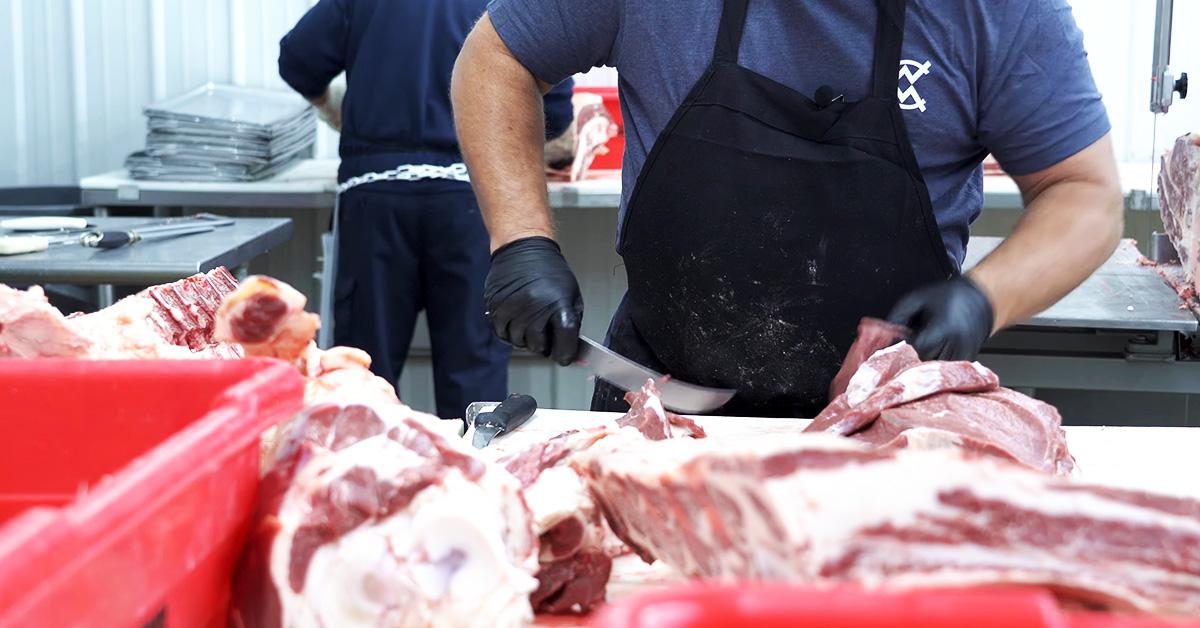
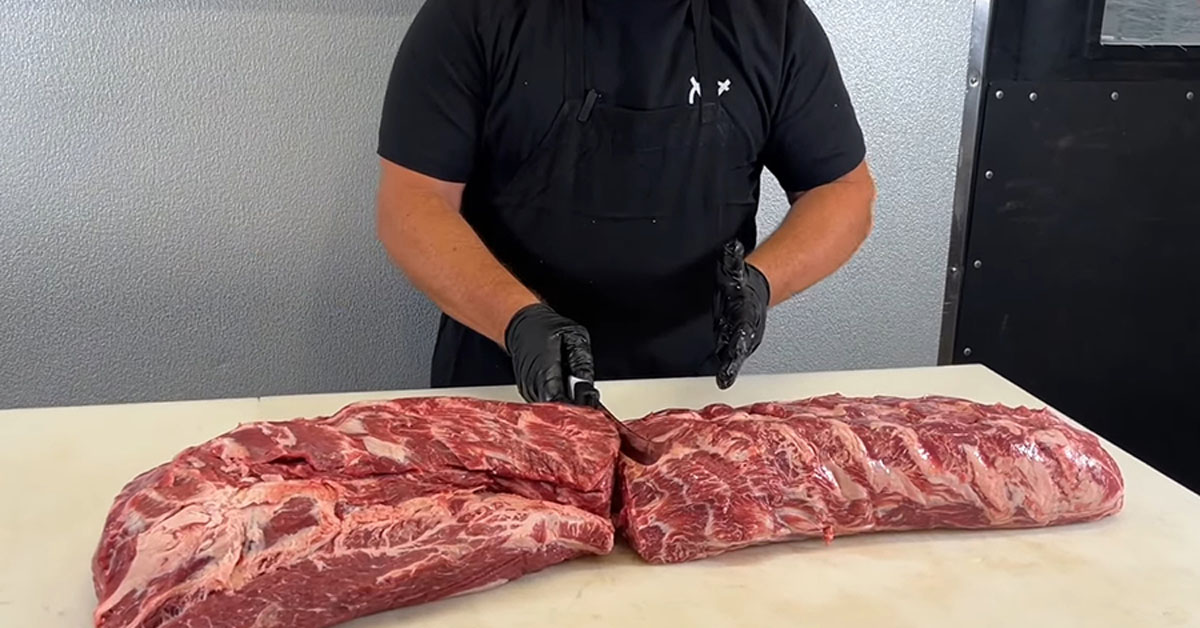
After slaughter, the carcass undergoes a 14- to 21-day dry-aging period to enhance tenderness and flavor. Then, our butchers break it down into four primary "primal" cuts: chuck (29%), round (22%), loin (16%), and rib (9%). We follow a customer-provided cut sheet that specifies preferences, such as steak thickness (3/4", 1", or 1 1/2"), roast sizes (typically 2–4 pounds), and whether cuts should be bone-in or boneless.
On average, a 1,000-pound animal has a dressing percentage of 63%, yielding a carcass weighing about 630 pounds after slaughter.
Step 4: Packaging and Labeling Each Cut
Once the cuts are prepared, we focus on packaging to maintain quality and ensure traceability. We vacuum-seal cuts for up to 18 months of freezer life or use traditional butcher paper. Roasts and steaks are packaged individually, while ground beef, stew meat, and stir-fry portions are packed in one-pound packages. Clear labeling makes identification simple and ensures complete traceability. These packages are then organized for efficient freezer storage. A whole cow typically provides 400 to 500 pounds of packaged beef, which requires about 10 to 12 cubic feet of freezer space.

Why Processing Locally Makes a Difference
We are committed to full traceability, and processing locally strengthens our ability to maintain control and quality from farm to fork.
How Local Processing Helps Farmers and Ranchers
By working directly with farmers and ranchers, we help them oversee every stage of production – from birth to plate. Local processing eliminates the need for corporate middlemen, allowing producers to keep a larger share of the food dollar while maintaining quality standards. This setup ensures ranchers can monitor the entire lifecycle of their livestock, prioritize humane handling, and provide market access for small-scale producers.
In the U.S., five corporations dominate meat processing. Partnering with local facilities offers farmers a reliable, appropriately scaled outlet for their products.
Gary Peebles, President of Homestead Natural Meats, captures the essence of this approach:
"The idea was simple… sell direct, sell to our neighbors, and know how those animals were taken care of from the time they were born to the time they ended up on someone’s plate."
This method boosts local economies by keeping money within the community. It supports agricultural suppliers, butcher shops, and skilled trades while helping preserve farmland. By making small family farms profitable, it reduces the pressure to sell land for non-agricultural purposes.
These direct partnerships not only ensure better product quality but also simplify logistics.
Shorter Transportation Distances and Local Supply Chains
Local processing reduces transportation time and fuel use, cutting costs and minimizing livestock stress. This proximity benefits ranchers and ensures customers receive fresher products since the meat spends less time in transit.
For instance, we dry-age beef on the rail for 11 to 14 days, which naturally enhances both flavor and tenderness. In contrast, industrial "boxed meat" is often aged during long-distance shipping. Our process ensures that quality is maintained at every step. As Gary Peebles highlights:
"Once animals get moved around and processed far away, there’s no real intention or control left over quality. You lose that direct responsibility to the people you’re feeding."
Get Started with Wild Country Meats
Since 1998, we’ve been dedicated to processing meat with care and precision. Our philosophy is simple: every animal deserves respect, and every customer deserves the best. When you choose us, you’re working with a third-generation butcher who knows that quality is non-negotiable. Ready to see what sets us apart? Let’s get started.
What We Promise Our Customers
We’ve developed a traceability system that ensures complete transparency throughout the entire process – from the moment your animal arrives to the final custom cuts. When you pick up your order, you’ll receive a detailed inventory report listing every cut we processed from your animal. For beef, we take it a step further by aging it for at least 21 days to achieve the perfect tenderness. And every cut is tailored to your exact specifications. As our owner, Chris Gabriel, proudly says:
"We don’t seek to satisfy our customers. We seek to amaze them."
– Chris Gabriel, Owner
This dedication has earned us a 4.6/5 star rating from our customers, who consistently highlight our transparency, cleanliness, and attention to detail.

How to Work with Us
Getting started is easy. First, schedule your butcher appointment either online or by phone. Then, complete your cutting order using our Beef Cutting Order or Pig Cutting Order forms, so we know exactly how you want your meat processed. Finally, choose your processing facility:
- Hominy location: Handles beef, pork, buffalo, lamb, and goat. Call us at 918-885-6758.
- Cleveland location: Specializes in wild game processing. Reach us at 918-358-8048.
Our operating hours are designed to fit your schedule:
- Hominy: Open Tuesday through Friday, 9:00 AM to 5:00 PM.
- Cleveland: Open Monday through Saturday, 10:00 AM to 6:00 PM, with the drive-thru opening at 8:00 AM.
For customers in the Tulsa metro, Oklahoma City metro, Bartlesville, Perry, or Stillwater areas, we offer delivery for just $5.00 per order – even for large orders like a whole beef. Ready to experience quality and care? Schedule your appointment today.

FAQs
How do you guarantee I get meat from my own animal?
We make sure that the meat you receive comes from your specific animal. Our process is built on complete transparency and traceability. At every step, we handle your beef with care, so you know exactly where it comes from.
What should I choose on the beef cut sheet?
When completing a beef cut sheet, it’s important to outline your preferences clearly for each type of cut. For steaks, decide on the thickness you prefer – common choices are 1 inch or 1 ¼ inch for premium cuts. You’ll also need to indicate whether you want them bone-in or boneless and how many steaks you’d like per package, typically ranging from 1 to 4.
For roasts, specify the size you’d like, usually between 2 to 4 pounds, and whether you want them with or without the bone. Additionally, you can customize your ground beef by selecting package sizes, lean-to-fat ratios, or even request specialty cuts like soup bones or brisket to suit your needs.
How much freezer space will a whole cow take?
A whole cow usually needs 16 to 20 cubic feet of freezer space. It’s important to ensure your freezer can handle this capacity. To make things easier, we recommend organizing the cuts in a way that allows for quick access and efficient storage.