
We have found that a good beef order starts before the animal reaches the processor.
If you want your beef cut your way, you need to make three choices first: steak thickness, roast size, and ground beef packaging. You also need to plan freezer space from take-home weight, not hanging weight. Most packaged beef ends up around 50% to 65% of carcass weight, so your cut sheet affects both what you eat and how much room you need at home.
For example, 200 pounds of packaged beef may need about 5 to 7 cubic feet of freezer space, and a half beef often needs 8 to 10 cubic feet. That is why we always tell people the same thing: think about meals first, then fill out the form.
Here is the short version of what matters most:
- Thicker steaks mean fewer steaks
- Smaller roasts give you more meal-sized packs
- More steaks and specialty cuts usually mean less ground beef
- Bone-in cuts take more freezer room per pound of edible meat
- Turnaround often runs 10 to 14 days
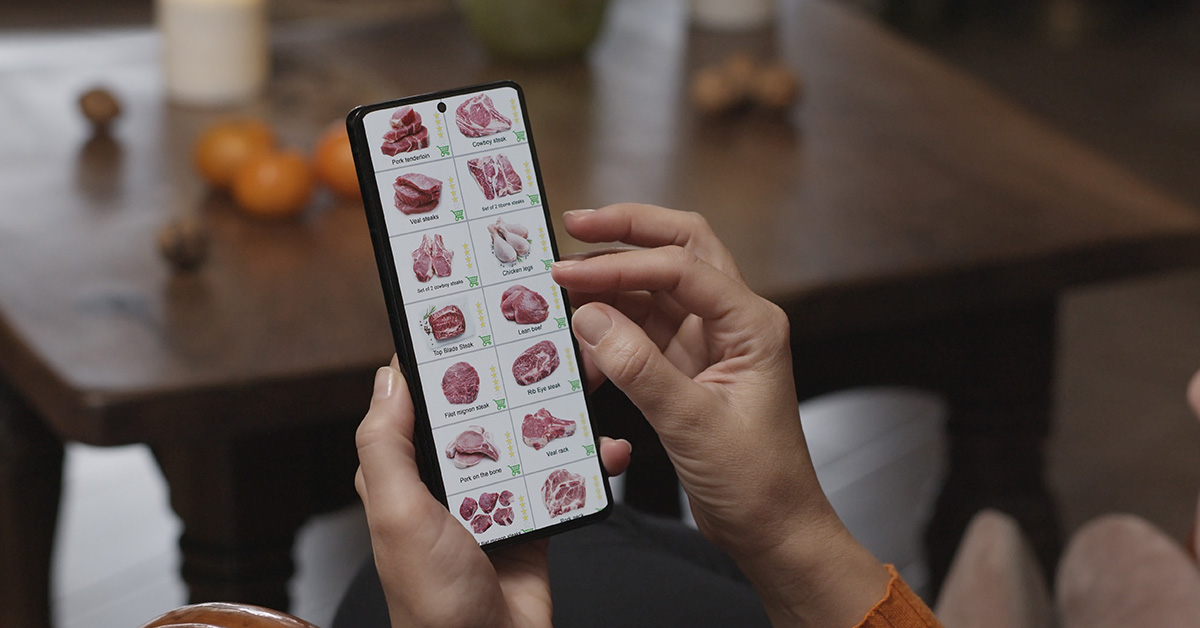
We also look at the process as a chain of small decisions. If you get those right, pickup day is simple. Here is what we want you to know.
Custom Processing a side of Beef | Professional Butcher
sbb-itb-5ae85c5
How the Beef Cut Sheet Works
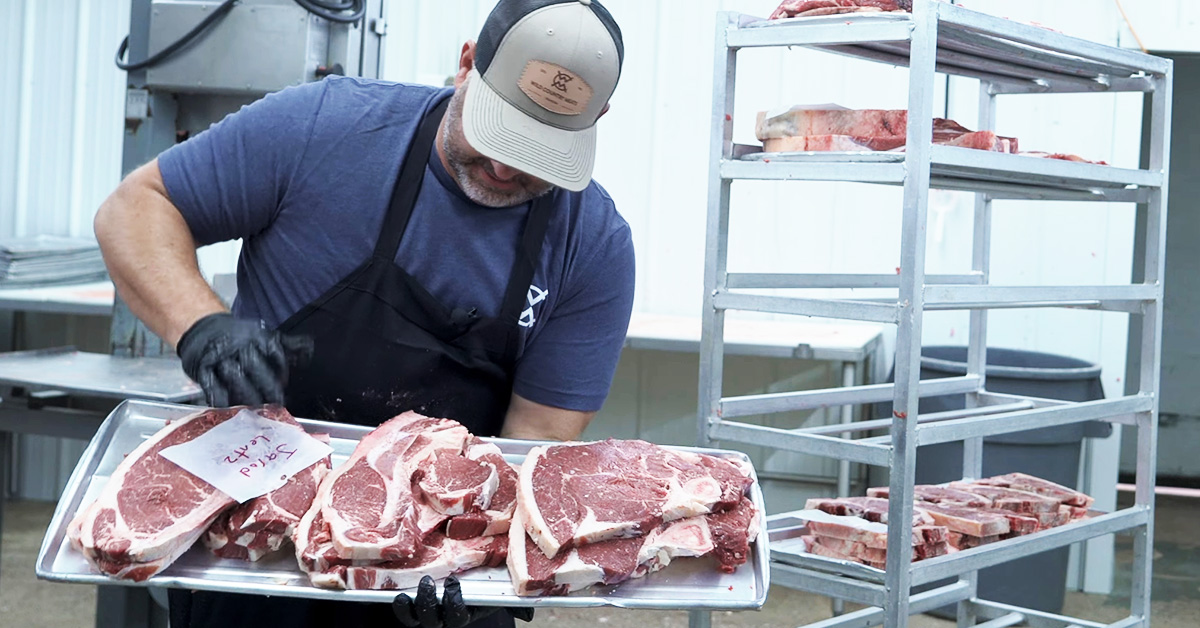
The online beef cut sheet order form is the blueprint for your order. Every choice we enter goes to the butcher before processing starts.
It tells the butcher how to cut, pack, and label the beef.
What the Cut Sheet Asks You to Decide
The form covers the main cutting choices. We decide which primals become steaks, which become roasts, and which get trimmed into ground beef or specialty items.
For each category, we also choose the details, including bone-in or boneless, steak thickness in inches (¾", 1", 1¼", or 1½"), how many steaks go in each package, roast size in pounds, ground beef package size, and whether we want specialty items like stew meat, cube steak, ribs, brisket, soup bones, and organ meats.
Why You Should Review Freezer Space and Meal Needs First
Before we open the form, we should check freezer space. A good rule is 1 cubic foot of freezer space for every 35 to 40 pounds of cut and wrapped beef.
That means 200 pounds of packaged beef may need about 5 to 7 cubic feet of usable freezer space, depending on package shape, bone-in picks, and how tightly the freezer is packed.
We also want our order to fit how our household cooks. If we cook for two, 1-pound ground beef packs and two-steak packages often make more sense. If we feed a bigger family, 2-pound ground beef packs and four steaks per package may work better.

Cut Sheet Tradeoffs to Know Before You Submit
Each choice on the cut sheet is an allocation decision, not an add-on. The total amount of beef stays the same. What changes is how that beef gets divided.
Here is how the main tradeoffs work:
| Cut Sheet Choice | Decision | Practical Effect on Freezer Inventory |
|---|---|---|
| Steak thickness | Amount of beef per steak | Thicker steaks mean fewer total steaks from the same primal |
| Steaks vs. ground beef | How the available trim is allocated | More steaks usually mean less ground beef |
| Roast size | Pounds per roast package | Larger roasts create fewer packages; smaller roasts give more meal-sized portions |
| Bone-in vs. boneless | Whether bone stays in the package | Bone-in cuts take more freezer space per pound of edible meat |
| Package count | Portions per vacuum-sealed bag | Smaller counts reduce thawing waste; larger counts suit batch cooking |
| Specialty cuts | Whether sections become stew meat, short ribs, brisket, or other items | More specialty products reduce the number of standard steaks, roasts, or ground beef packages |
A simple way to think about it: if we ask for thicker steaks, larger roasts, and more specialty cuts, we leave less trim for ground beef.
So the best mix is the one that lines up with how we cook and eat. If anything on the form feels unclear, we should contact us before submitting, because the available selections control which instructions can be applied to the order.
Next, we break down the three choices that shape most orders: steak thickness, roast size, and ground beef packages.
Steak Thickness, Roast Size, and Ground Beef: How to Choose
Beef Cut Sheet Choices: Tradeoffs at a Glance
Choosing Steak Thickness and Package Counts
We start with steak thickness because it changes both portion size and how many steaks you get per package.
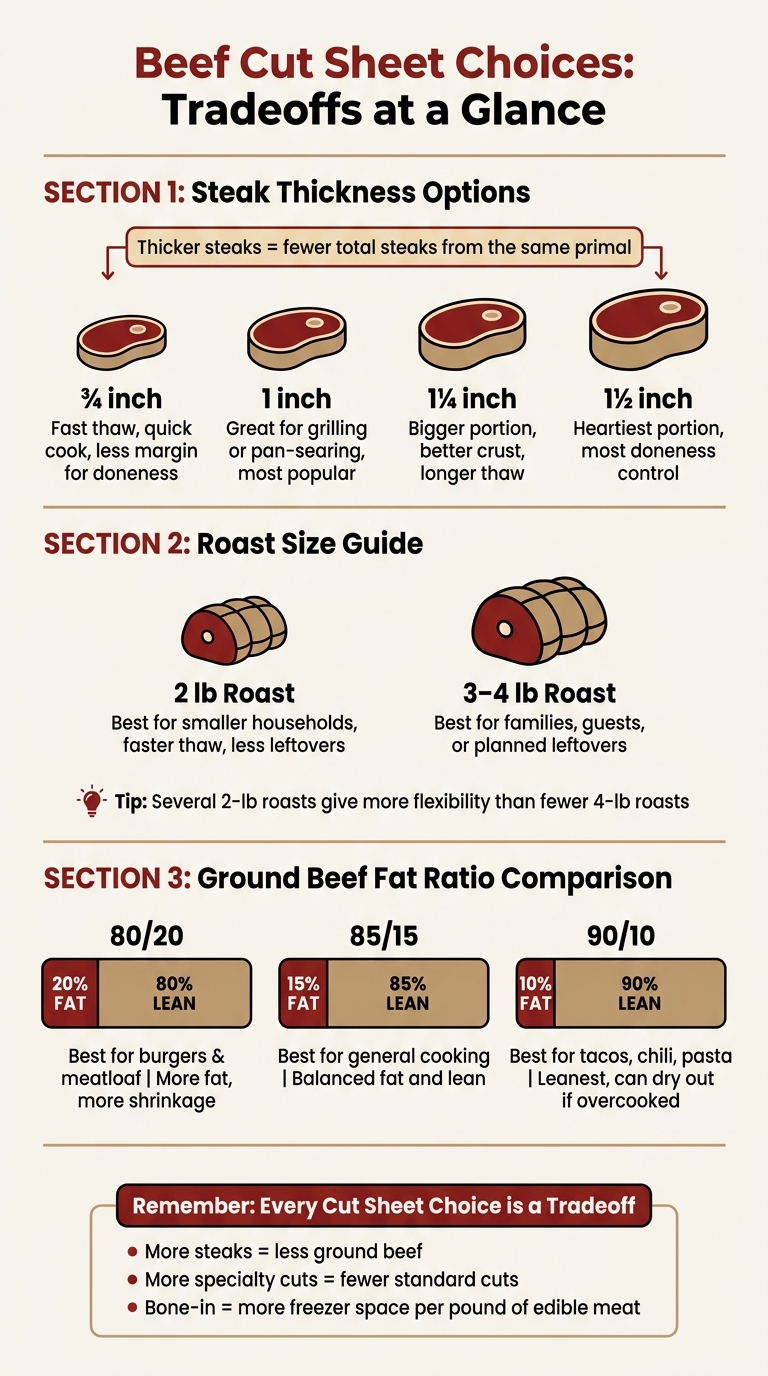
The cut sheet options are ¾ inch, 1 inch, 1¼ inches, and 1½ inches. A ¾-inch steak thaws and cooks fast, which is handy on busy weeknights, but there is less room for error between done and overdone. A 1-inch steak works well for grilling or pan-searing. A 1¼-inch steak gives us a bigger portion and more room for a browned crust, but it takes longer to thaw and grill. A 1½-inch steak is the thickest option. It fits households that want a heartier portion and the most control over doneness.
There is a simple tradeoff here: thicker steaks mean fewer steaks from the same primal.
For package counts, we like to match the pack to how the household cooks:
- One steak per package works well for individuals or couples.
- Two steaks per package fits a small family dinner.
We recommend choosing the count based on how many steaks your household usually cooks at one time.
Choosing Roast Size for Your Household
Most roast requests land between 2 and 4 pounds.
A 2-pound roast thaws faster and keeps leftovers in check, so it tends to work well for smaller households. A 3- to 4-pound roast makes more sense for a family meal, guests, or planned leftovers for sandwiches and other meals later in the week.
In our experience, smaller households usually get more flexibility from several 2-pound roasts than from fewer 4-pound roasts.

Choosing Ground Beef Package Size and Fat Ratio
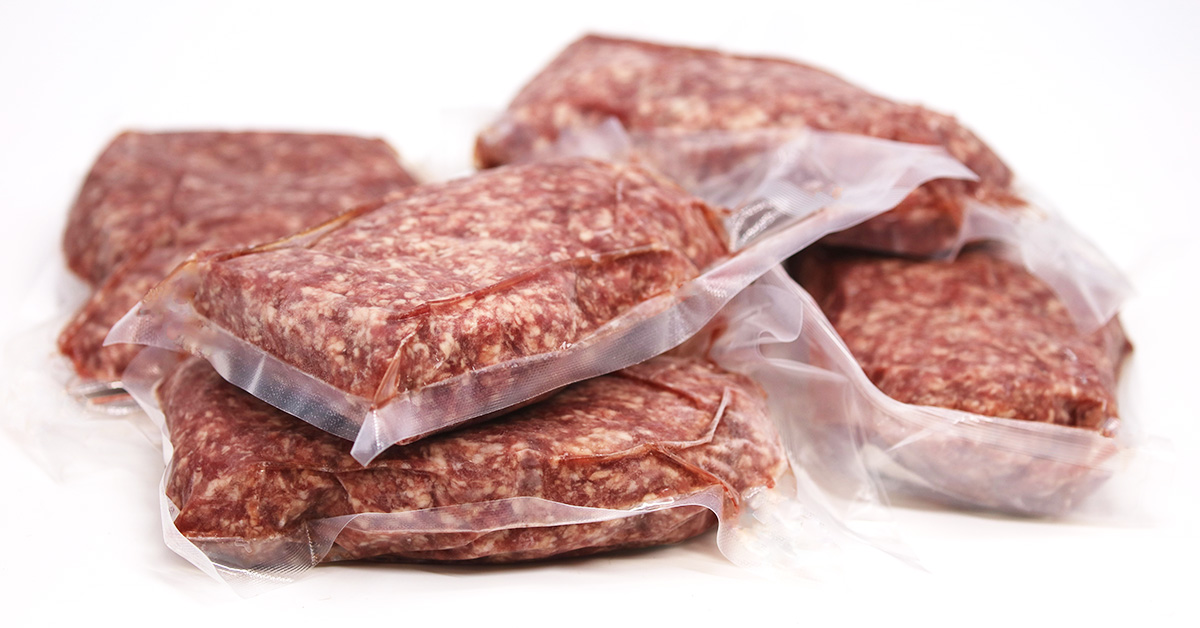
Ground beef package size should line up with the meals we make most often. 1-pound packages are a good fit for quick meals for one or two people. 2-pound packages work better for batch cooking and cut down on the number of packs we need to store.
The lean-to-fat ratio tells us how much lean meat and fat are in the blend. 80/20 means about 80% lean and 20% fat. That is a common pick for burgers because the extra fat adds moisture, flavor, and browning. 85/15 works well for day-to-day cooking. 90/10 is the leanest common option and fits tacos, chili, pasta sauces, or casseroles where we want less rendered fat, though it can dry out if overcooked.
| Ground Beef Blend | Best Use | Main Tradeoff |
|---|---|---|
| 80/20 | Burgers, meatloaf | More fat; greater shrinkage during cooking |
| 85/15 | General-purpose cooking | Balanced, but not as rich as 80/20 or as lean as 90/10 |
| 90/10 | Tacos, chili, pasta sauces | Less fat; can dry out if overcooked |
If we want a specific ground beef yield, we should set that target on the online cut sheet order form before submitting it. Those choices also affect final yield, which is why the next section covers hanging weight versus take-home weight.
Hanging Weight, Take-Home Weight, and Scheduling
Hanging Weight vs. Take-Home Weight: What the Numbers Mean
Once we set the cut sheet, the next step is figuring out how much beef will actually end up in our freezer.
Hanging weight is the weight of the carcass after slaughter and dressing. Take-home weight is the packaged meat we bring home. The difference is normal, because trimming and deboning remove part of that weight.
"The amount of meat you take home is normally 50% to 65% of the carcass weight of your animal."
How to Plan Freezer Space Around Your Final Yield
We should use take-home weight, not hanging weight, when we check freezer space.
Here’s a simple way to think about it: if our animal has a hanging weight of 600 lbs, our take-home weight may fall between 300 and 390 lbs, depending on the cuts we choose. A half beef order usually needs 8 to 10 cubic feet of freezer space, and a whole beef order usually needs 16 to 20 cubic feet.
If we ask for more bone-in cuts, we can expect a higher take-home weight. If we go mostly boneless, we should expect a lower number.
How to Schedule Processing and Confirm Turnaround
We recommend scheduling the processing date before transporting the animal. It also helps to have the cut sheet order form completed and ready at arrival.
Standard turnaround is 10 to 14 days, and that includes the hanging period. Some orders may be ready sooner, especially if the animal is small or lean, or if the order is mostly ground beef. Specialty requests and seasonal volume can change the timeline, so we should confirm the expected ready date at drop-off.
When processing is done, we contact customers for pickup or delivery. At that point, we should review the itemized inventory report against the original cut sheet and make sure everything matches the order.
After we set the date and estimate yield, the last step is confirming inspection and traceability.

USDA-Inspected Processing: Summary and Next Steps
Why USDA Inspection and Order Traceability Matter
Before drop-off, we need to confirm the facility is USDA-inspected and that our order matches the cut sheet.
USDA inspection adds food-safety oversight to every animal we process. For a deeper look at what that oversight includes, see our full breakdown of what is USDA inspected and why it matters.
Traceability keeps every package tied to one animal and helps protect order accuracy.
That tag stays with the carcass from drop-off through cutting. It keeps every package tied to one animal. In plain terms, it helps guarantee the meat we take home comes only from our animal. For a closer look at how that system works from start to finish, read our article on why traceability matters in custom processing.

Key Takeaways
Before processing begins, here are the steps that matter most:
- Plan freezer space from take-home weight, not hanging weight. Take-home yield usually runs 50% to 65% of carcass weight.
- Complete the cut sheet order form with care. We should make sure the name on the form matches the label name we want on our packages, and double-check steak thickness and roast size before submitting.
- Confirm scheduling and turnaround before drop-off. Standard turnaround is 10 to 14 days and can vary based on order size and seasonal volume.
With those checks done, our order is ready for drop-off.
FAQs
How do I fill out a beef cut sheet?
Start by scheduling your appointment online or by phone. After that, use the online Beef Processing Order Form to select your cut preferences.
We’ll choose details like:
- Steak thickness, plus bone-in or boneless
- Roast size
- Ground beef lean-to-fat ratio
- How many steaks or portions go in each package
How much freezer space will my order need?
We plan on about 1 cubic foot of freezer space for every 35 to 40 pounds of meat. Since odd-shaped cuts can eat up more room, we usually estimate a bit high.
A whole cow often yields 400 to 500 pounds of packaged beef. That means we usually need about 16 to 20 cubic feet of freezer space.
If we’re buying a quarter of beef or more, we may need a larger freezer.
What cuts should I choose for my household?
We recommend choosing cuts based on how our household likes to cook and eat.
If we grill a lot, we should ask for steaks cut 1 to 1.5 inches thick. If we lean toward slow cooking or braising, roasts and cuts with more connective tissue tend to fit better.
We also need to decide a few practical details before we fill out the cut sheet:
- Bone-in or boneless
- Roast sizes
- Ground beef package size
- Lean-to-fat ratio
If we want more burger meat, we can grind tougher cuts. Then we can use the online cut sheet to lock in our choices.
Related Blog Posts
- How to Buy a Half Cow or Whole Cow in Oklahoma City (And Get it Delivered)
- See Exactly Where Your Beef Comes From (Full Cow Processing Video)
- Meat Delivery in Oklahoma City: How to Get Fresh Beef, Pork & Chicken Delivered to Your Door
- Beef for Sale in Oklahoma: How to Buy Direct by the Cut, Box, or Bulk